

Join our daily newsletter At The Bell to receive exclusive market insights
- The European Union has agreed to impose targeted sanctions on certain Russian officials allegedly involved in the recent poisoning of opposition leader Alexei Navalny
- The sanctions include travel bans and asset freezes for between six and eight people, as well as an undisclosed Russian entity
- In response, Moscow has denied Russian involvement in the poisoning and is now considering sanctions of its own
- While the decision by the EU represents an increasingly firm diplomatic stance towards Russia, the sanctions are not expected to take effect immediately
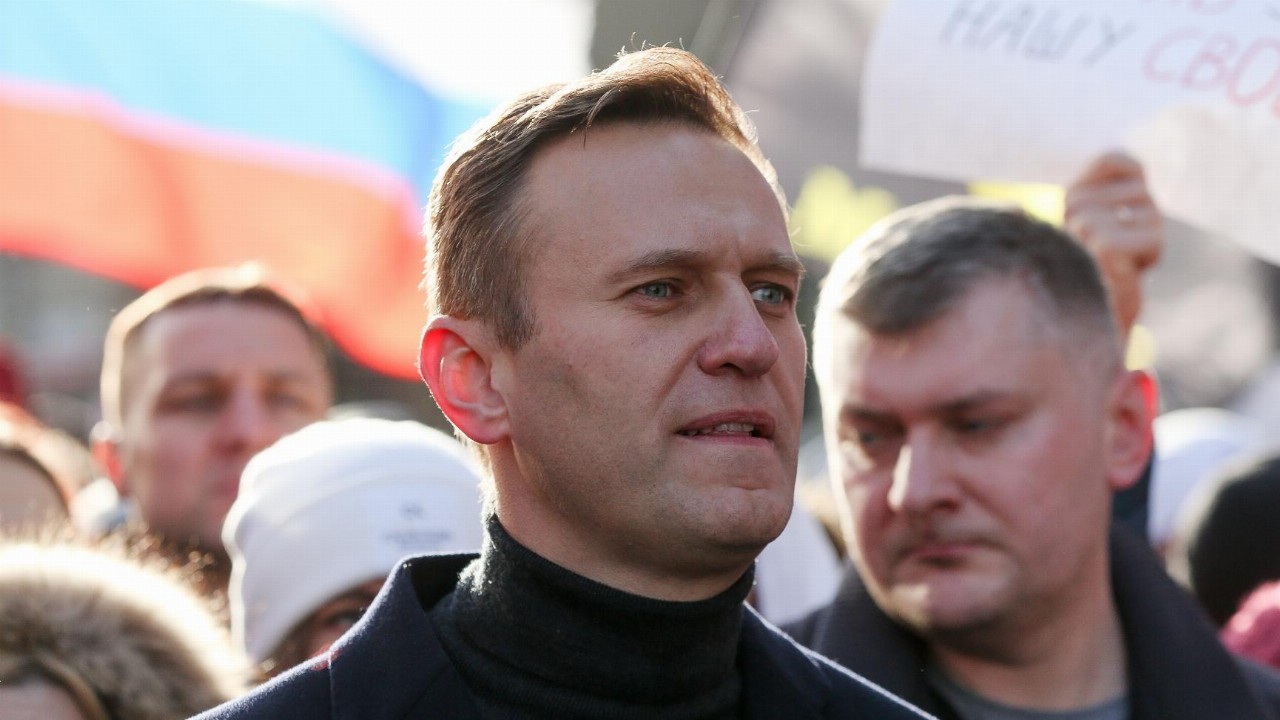
The European Union has agreed to impose targeted sanctions on certain Russian officials allegedly involved in the recent poisoning of opposition leader Alexei Navalny.
Foreign ministers from Germany and France led the discussion in Luxembourg on Monday, which outlined travel bans and asset freezes for a list of between six and eight people, as well as one undisclosed Russian entity.
Moscow has persistently denied any involvement in the poisoning, but has also failed to provide a credible explanation as to how the banned Soviet-era nerve agent Novichok was detected in Navalny’s body.
German Foreign Minister Heiko Maas said the E.U. has agreed to enact sanctions against individuals that were consider to be responsible for the violation of international law.
“It is important that the European Union shows unity concerning such a serious crime,” he added.
However, Vladimir Dzhabarov, a senior Russian politician, said Moscow would respond with sanctions of its own, and that there remains no concrete evidence behind the accusations.
“They are introducing sanctions over an issue that has no legal basis, no evidence, or documentation,” Dzhabarov said.
Alexei Navalny fell ill on August 20, on a flight over Siberia, and was subsequently airlifted to Berlin for treatment.
The Organisation for the Prohibition of Chemical Weapons (OPCW) has confirmed blood samples demonstrated the presence of Novichok, which was created sometime in the 1970s and 1980s from materials which are now highly restricted.
While the decision represents an increasingly firm diplomatic stance towards Russia, the sanctions are not expected to take effect immediately. Rather, legal texts must be prepared and cleared, before being approved by the 27 E.U. states.
That said, the swiftness of the discussion is in stark contrast to 2018, when it took almost a year for sanctions to be agreed upon by the E.U. after the poisoning of a former Russian spy in Britain — which is also thought to have involved Novichok.