

Join our daily newsletter At The Bell to receive exclusive market insights
- QEM’s newly acquired Garden Valley project in Idaho carries historical records of a 500lb columbite haul and a rare 309lb crystal find, pointing to a rare-metal system that’s never been modern-drilled.
- The U.S. has imported 100% of its niobium and tantalum since the 1950s, with Brazil controlling ~75% of global niobium supply — putting projects like Garden Valley squarely in America’s critical minerals strategy.
- QEM has named five main prosects associated with the Garden Valley Project.
- All historical figures remain unverified to modern JORC standards, but the project adds a second critical minerals string to QEM’s bow alongside its tungsten-antimony-gold Big It project.
QEM Limited (ASX: QEM) has uncovered what could become an intriguing new critical-minerals exploration story in the United States, with a post-acquisition review of its Garden Valley Project in Idaho highlighting historical evidence of niobium, tantalum and rare-earth mineralisation across multiple pegmatite prospects.
.png)
The company announced the results of its review following its acquisition of Freshwater Metals Pty Ltd, which brought the Garden Valley and Big It projects into the QEM portfolio.
Importantly, QEM has not yet established a formal mineral resource at Garden Valley, so the scale and economic potential of the mineralisation remain unknown. What the historical records do provide is a number of compelling targets for QEM to investigate.
And one of them, Vaught-Peck, has some particularly interesting history.
A 309-pound crystal grabs the attention
The standout target is the Vaught-Peck prospect, also known historically as the Vaught Columbite or Columbite Group.
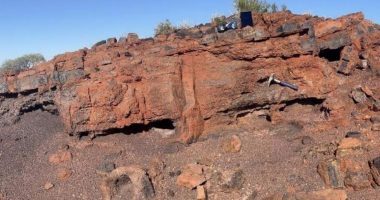
Historical US government and Idaho geological records describe a strongly zoned pegmatite approximately 250 feet long and at least 200 feet wide, with historical underground development extending beneath a prominent quartz core.
The prospect was reportedly worked intermittently for columbite and mica from around 1900, with historical records citing approximately 500 pounds of columbite production.
More strikingly, the historical records describe the recovery in 1950 of a 309-pound crystal comprising a columbite-rich inner zone surrounded by samarskite, accompanied by an approximately 100-pound samarskite crystal.
For a modern exploration company, that’s the sort of historical information that warrants a closer look.
Columbite is a principal niobium-bearing mineral, while samarskite can contain niobium and rare earth elements, among others.
The important caveat is that these are historical observations, not modern assays or a resource estimate. QEM itself has made that distinction clear.
Nevertheless, the scale and mineralogical characteristics described in the historical records provide a compelling reason to get back onto the ground.
It’s not just one pegmatite
Perhaps the more interesting aspect of QEM’s review is that Vaught-Peck doesn’t appear to be an isolated occurrence.
Historical records identify several other mineralised pegmatites across the broader Garden Valley area, including Bowman and Mirandeborde, with additional evidence at Mica Dome.
At Bowman, historical workings exposed pegmatites containing reported columbite, samarskite and euxenite.
At Mirandeborde, columbite and samarskite were reportedly identified across multiple pegmatite exposures, with workings extending through approximately 300 feet of vertical relief.
Mica Dome provides further evidence of differentiated pegmatites, including reported rare-earth oxides.
That changes the exploration proposition somewhat.
Rather than simply asking whether an old mine contains more mineralisation, QEM can now investigate whether these individual occurrences are manifestations of a broader rare-metal pegmatite system.
That’s a much more interesting exploration question.
Why niobium matters
Niobium isn’t a metal most investors encounter every day, but it is strategically important.
Its primary use is in steel, where relatively small additions can improve strength while maintaining weldability. It also has applications across aerospace, energy infrastructure and specialist alloys, with emerging applications in battery technologies.
The issue is supply concentration.
QEM points to Brazil’s dominant position in global niobium supply, with Brazilian producer CBMM accounting for a substantial proportion of the world’s production.
For the United States, the supply-chain issue is even more pronounced: the country has not recorded significant domestic niobium mining since the late 1950s and remains heavily dependent on imports.
That creates an interesting strategic backdrop for an exploration project located inside the United States.
If QEM can ultimately demonstrate a commercially significant niobium-bearing system at Garden Valley, the project’s location could become an important part of the investment story.
And then there’s tantalum
Tantalum adds another dimension.
The metal is particularly important to the electronics industry, including tantalum capacitors used in electronic devices and automotive systems. It also has applications across aerospace, defence, medical technology and chemical processing.
Like niobium, tantalum supply chains are geographically concentrated and can be exposed to geopolitical and ethical sourcing concerns.
The fact that the Garden Valley pegmatites are described as a niobium-tantalum-REE system therefore potentially gives QEM exposure to several critical-mineral themes from a single exploration package.
The company still needs to establish whether tantalum occurs at meaningful concentrations, in what minerals, over what widths and with what continuity.
QEM’s next move is arguably more important than today’s announcement
The announcement isn’t really about declaring success.
It’s about defining where QEM should spend its exploration dollars next.
The company has identified Vaught-Peck as its highest-priority historical target, followed by Bowman and Mirandeborde.
The proposed work programme is fairly conventional for an under-explored pegmatite field:
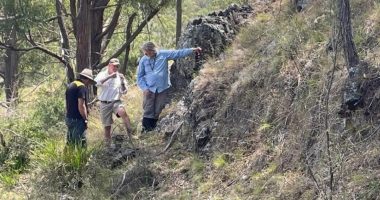
- Geological and structural mapping
- Systematic rock and soil geochemistry
- Modern geophysics and radiometrics
- Follow-up sampling
- Drilling of priority targets
This is where the story should become considerably more interesting.
Historical records can tell explorers where to look.
Modern exploration needs to establish whether those historical occurrences have scale, continuity and grade.
If modern geochemistry identifies coherent niobium-tantalum-REE anomalies extending beyond the old workings, the exploration thesis could strengthen considerably.
If drilling then demonstrates thick, continuous and mineralised pegmatites, the project could move into an entirely different phase.
A potentially bigger story for QEM
Garden Valley also needs to be viewed alongside QEM’s broader strategy.
The company is positioning itself around critical minerals, and its U.S. portfolio now includes both Garden Valley and the Big It Project.
Garden Valley brings potential exposure to niobium, tantalum and rare earth elements, while Big It has a history of tungsten production and is also considered prospective for antimony and gold.
That gives QEM an interesting combination of commodities tied to the increasingly important theme of U.S. critical-mineral supply security.
For Garden Valley, however, the immediate story is much simpler: can QEM turn a collection of intriguing historical discoveries into a modern exploration success?
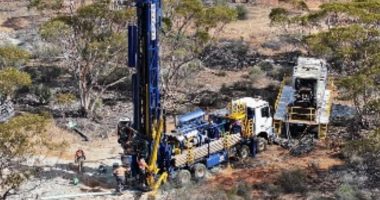
The company now has a defined group of targets, a historical geological record pointing to significant rare-metal mineralisation, and a clear exploration pathway beginning with mapping, geochemistry and geophysics before potentially moving to drilling.
The historical records don’t establish an economic deposit — that’s for QEM’s modern exploration programme to determine.
But they do provide something every explorer needs at the outset: a reason to go looking.
And at Garden Valley, there appears to be plenty worth looking for.
Join the discussion: See what HotCopper users are saying right now and be part of the conversations that move the markets.
The material provided in this article is for information only and should not be treated as investment advice. Viewers are encouraged to conduct their own research and consult with a certified financial advisor before making any investment decisions. For full disclaimer please click here.