

Join our daily newsletter At The Bell to receive exclusive market insights
Red Mountain Mining (ASX: RMX) has returned further strong tungsten results from its Pioneer Tungsten Project in Montana, with systematic rock chip sampling highlighting multiple areas of mineralisation across the expanded project.
The company said 50 rock chip samples returned more than 500 parts per million tungsten trioxide, or WO3, while 31 samples exceeded 1,000ppm WO3.
The strongest tungsten results included 5,473ppm, or 0.55%, WO3 at the Greenstone prospect, 4,036ppm, or 0.40%, at Glow Worm and 3,241ppm, or 0.32%, at Lost Creek.
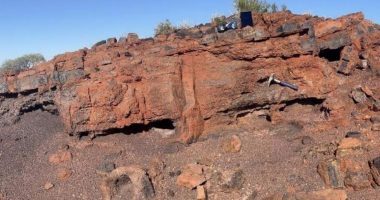
The results are significant because the three prospects sit along approximately 5km of the eastern margin of the Cretaceous Mount Torrey Batholith, where limestone units are known to host garnet skarns containing tungsten mineralisation in the form of scheelite.
Red Mountain said there is a strong correlation between the distribution of mapped garnet skarn and anomalous to mineralised tungsten results across Greenstone, Glow Worm and Lost Creek.
At Greenstone, 30 of 113 rock, float and spoil samples returned more than 500ppm WO3, including 17 above 1,000ppm. The strongest mineralisation is concentrated along a roughly 400m strike immediately south-southwest of the historical Greenstone Mine Claim, where it coincides with mapped garnet skarn.
The area has already been identified by Red Mountain as a potential drilling target and is expected to remain a priority for follow-up work.
Glow Worm also returned a strong tungsten response, with 12 of 57 rock, float and spoil samples exceeding 500ppm WO3 and eight above 1,000ppm, with a peak result of 4,036ppm.
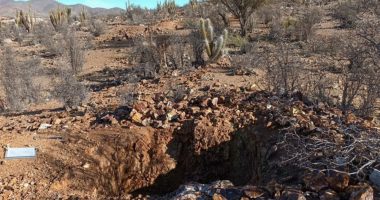
The prospect contains mapped garnet skarn extending for around 700m and has a history of early copper exploration, with at least six adits and four shallow shafts dating back to the first half of the 20th century.
Lost Creek has also delivered encouraging tungsten results, with the current Red Mountain ground extending into an area containing historical mine workings and mapped skarn. The Lost Creek Mine itself recorded production of about 19,000 tonnes at an average grade of 0.18% WO3 between 1952 and 1956.
The tungsten results are accompanied by strong copper, silver and gold assays, pointing to the potential for a broader polymetallic system.
At the northern portion of Greenstone, rock samples returned up to 6.72% copper and 462 grams per tonne silver, while gold reached 3.88g/t. Glow Worm also returned up to 3.97% copper and 199g/t silver, with the results broadly consistent with the prospect’s historical focus on copper mineralisation.
The Pioneer project has also grown substantially since Red Mountain secured ownership of the ground in May. The company plans to continue mapping and sampling across Greenstone and Lost Creek, including areas beyond the historical skarn mapping, while further work is planned at Mammoth.
Join the discussion: See what HotCopper users are saying right now and be part of the conversations that move the markets.
he material provided in this article is for information only and should not be treated as investment advice. Viewers are encouraged to conduct their own research and consult with a certified financial advisor before making any investment decisions. For full disclaimer information, please click here.