

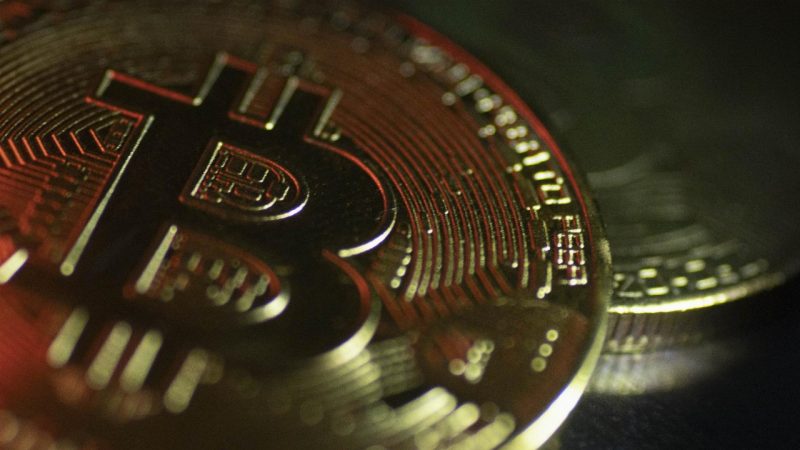
- Bitcoin falls to a two-week low on Monday after China expanded its crackdown on mining activity
- The digital asset slid as low as $41,382.21, representing a loss of more than 10 per cent — its largest daily drop in more than a month
- On Friday, authorities in China ordered bitcoin mining projects in the southwest province of Sichuan to close
- China’s State Council also vowed last month to clamp down on trading as part of its campaign to control financial risk
- According to the University of Cambridge, China accounts for around 65 per cent of global bitcoin mining
Bitcoin fell to a two-week low on Monday after China expanded its crackdown on mining activity, leading to increased uncertainty among investors about the digital asset’s future.
Dragging other cryptocurrencies with it, bitcoin slid as low as $41,382.21, representing a loss of more than 10 per cent — its largest daily drop in more than a month.
The world’s largest cryptocurrency has lost more than 20 per cent in the last six days alone and was at less than half its April peak of more than $84,000. Year-to-date, however, bitcoin is up roughly 9.8 per cent.
On Friday, authorities in China ordered bitcoin mining projects in the southwest province of Sichuan to close, while the State Council — China’s cabinet — vowed last month to clamp down on trading as part of its campaign to control financial risk.
Then, on Monday, China’s central bank said it had summoned some banks and payment firms, like China Construction Bank and Alipay, urging them to tighten their own regulations on cryptocurrency trading.
“People still react strongly to actions from China that create uncertainty so this is likely to reflect negatively on the bitcoin price,” said Ruud Feltkamp, chief executive officer at crypto trading bot Cryptohopper.
“China is rolling its own cryptocurrency and has every incentive to have as little competition as possible […] I think we will see miners leaving China and relocate where there is spare or cheap energy.”
While accurate data is scarce, the University of Cambridge estimates that China accounts for around 65 per cent of global bitcoin mining, with Sichuan its second-biggest producer.
Elsewhere, former bitcoin advocate Nassim Taleb — the author of several acclaimed books on finance and risk, which focus particularly on problems of randomness, probability and uncertainty — published a paper outlining his recent shift in opinion.
“[I]n spite of the hype, bitcoin failed to satisfy the notion of ‘currency without government’ (it proved to not even be a currency at all),” the essayist, mathematical statistician and analyst wrote in a paper titled “Bitcoin, Currencies and Bubbles”.
“[Bitcoin] can be neither a long or short term store of value (its expected value is no higher than 0), cannot operate as a reliable inflation hedge, and, worst of all, does not constitute, not even remotely, a tail protection vehicle for catastrophic episodes,” he continued.
It’s a stark contrast to his standing in 2017, when he wrote the foreword to ‘The Bitcoin Standard’ by economist Saifedean Ammous, which made the case for the digital asset as a new form of sound money.
Back then, Taleb wrote that bitcoin is “an excellent idea. It fulfills the needs of the complex system […] because it has no owner, no authority that can decide on its fate. It is owned by the crowd, its users. And it now has a track record of several years, enough for it to be an animal in its own right.”
As of this morning, bitcoin is trading at $43,256.68.