

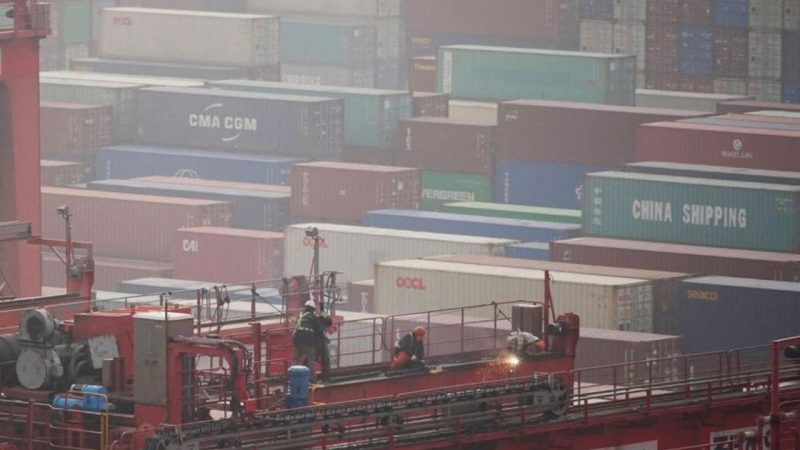
- Export growth in China has slowed over January and February after Russia’s invasion of Ukraine heightens uncertainty for global trade
- Overseas shipments rose 16.3 per cent over the period, a decrease from the 20.9 per cent growth seen in December
- Some Chinese exporters have delayed shipments to Ukraine as others await payment from businesses in Russia before organising further shipments
- On Saturday, Premier Li Keqiang highlighted the increased pressure of maintaining steady export growth, saying China must protect itself from overseas risk
- Russia has become increasingly dependent on China after sanctions from other countries take effect
Export growth in China has slowed over January and February after Russia’s invasion of Ukraine heightens uncertainty for global trade.
Overseas shipments rose 16.3 per cent over the period, a decrease from the 20.9 per cent growth seen in December.
It comes as some Chinese exporters delay shipments to Ukraine as others await payment from businesses in Russia before organising further shipments.
Last year exports were booming in China, but with increasing costs for exporters, demand is expected to ease.
Imports fell below forecast with growth of 15.5 per cent, a fall from the 19.5 gain seen in December.
The country is targeting economic growth of 5.5 per cent, marking a sharp decline to the 8.1 per cent GDP growth in the previous year.
On Saturday, Premier Li Keqiang highlighted the increased pressure of maintaining steady export growth, due to inadequate supply of raw materials and energy.
He said China must protect itself from overseas risk, differing to the previous year in which there was a push for outbound investment and cooperation.
In a separate budget report also released on Saturday, the country increased spending on defence by 7.1 per cent.
China is yet to condemn Russia’s invasion of Ukraine despite Scott Morrison demanding the country take action this morning.
Russia has become increasingly dependent on China after sanctions from other countries take effect.