

Join our daily newsletter At The Bell to receive exclusive market insights
Retirees who invest in the share market have been handed a tax advantage under Australia’s new capital gains tax rules, and it could come down to receiving just $1 of the Age Pension.
From 1 July 2027, the existing 50 per cent CGT discount will be replaced by inflation-adjusted cost base indexation for future capital gains, alongside a new 30 per cent minimum tax on certain real gains.

For investors who rely on selling investments to fund their retirement, this will change the way they think about taking profits. For those looking to retire, it may change the way they invest.
There is a silver lining for pensioners.
Under the new legislation, anyone receiving a qualifying government payment, including the Age Pension, during the financial year they realise a capital gain will be exempt from the new 30 per cent minimum tax.
That means someone receiving a small part pension could potentially avoid thousands of dollars in additional tax when selling shares.
Consider two retirees with similar share portfolios. One is entirely self-funded, while the other receives a part Age Pension.
When they both sell their shares with substantial gains, the second retiree could have a significant tax advantage, simply because they qualify for the exemption.
This doesn’t mean pensioners escape capital gains tax altogether, as profits are still assessed under normal tax rules, and Centrelink’s income and assets tests determine eligibility. But there is another important consideration.
Gains accumulated before July 2027 retain the existing CGT discount treatment, while future gains will be calculated under the new indexation rules.
The lesson here is that successful investing isn’t just about finding the next winning stock. Knowing when to buy, when to take profits, how to manage risk and how to minimise tax can make a substantial difference to what you keep.
For retirees, this offers an opportunity to take a more active role in managing their investments, rather than simply relying on dividends, interest, or gradually selling down their holdings.
Learning to identify opportunities in the share market and manage trades effectively could offer another way to make their retirement savings work harder.
After all, retirement doesn’t necessarily mean giving up on investing and growing your wealth. For those willing to develop the skills, it could be the perfect time to take greater control of their financial future.
Best and worst sectors
Utilities is the best-performing sector this week, rising just 0.19 per cent as electricity providers hold up against the downturn. This defensive area, with recurring revenues, is providing some support as investors become more cautious.
Communication Services followed up 0.21 per cent. Like Utilities, its relative strength aligns with a more defensive market, as Telstra, the sector’s largest telecommunications stock, has risen strongly, taking the sector with it.
Healthcare rounds out the top three despite slipping 0.37 per cent, highlighting that this week’s stronger performers have largely been those in defensive areas. I suspect the general theme has been more about limiting losses rather than delivering substantial gains.
At the other end, Materials is the weakest sector, falling 10.39 per cent as softer Chinese economic data, rising bond yields and a stronger US dollar have added pressure to already declining gold, copper and iron ore prices.
Energy followed, down 3.80 per cent, which is in line with the fall in oil prices this week. Falling oil prices are also weighing on producers amid the broader retreat from commodity-exposed stocks.
Consumer Discretionary rounds out the bottom three, declining 3.05 per cent as retail and travel stocks come under pressure. Renewed interest-rate concerns have also weighed on this sector.
Best and worst stocks
Sonic Healthcare is the best-performing stock this week, up 7.24 per cent after reaffirming its FY2027 earnings guidance at its annual general meeting and reassuring investors about its outlook despite broader market weakness.
Next, Life360 is up 4.42 per cent, continuing its recovery from last week’s post-results sell-off. The rebound follows a quarterly update showing strong growth in revenue and paying subscribers, despite concerns about its growth outlook.
ResMed rounds out the top three, gaining 4.15 per cent alongside strength in its US-listed shares. The weaker Australian dollar also provides a currency tailwind for its Australian listing.
The worst performer is Evolution Mining, down 16.44 per cent as declining gold prices have driven heavy selling across gold producers.
This was followed by Mineral Resources down 16.35 per cent, on weaker iron ore and lithium prices and concerns about China.
Paladin Energy rounded out the bottom three, down 13.67 per cent following last week’s $525 million equity raising. The funding will support its Canadian uranium projects, with new placement shares scheduled for allotment this week.
All-Ordinaries Index Update
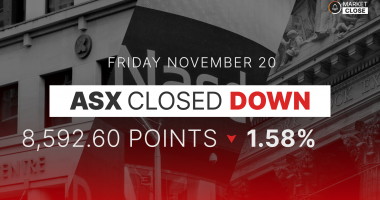
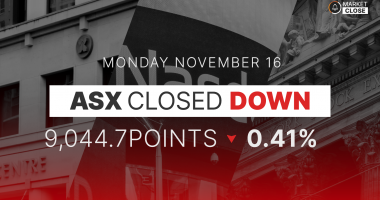
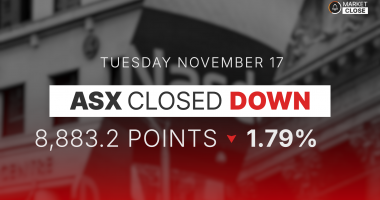
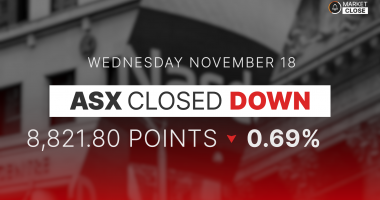
The market sold off sharply this week, with the All-Ordinaries Index down 4 per cent so far, wiping out six weeks of gains in just five days.
The rejection came at the 9,200 level, which, as mentioned many times, has provided resistance for the Australian market over the past year. We are now back on the defensive, with the next important support levels sitting around 8,800, followed by 8,600.
If this sounds familiar, our market has been moving sideways since mid-last year.
A constant tug-of-war has unfolded between buyers and sellers, as rallies repeatedly ran into resistance before sellers stepped back in and pushed prices lower.
The biggest damage this week came from the Materials sector, falling a whopping 10 per cent, significantly more than any other sector. It has now returned to levels not seen since November last year. Interestingly, this is also the sector I believe could lead the recovery once the market eventually finds its feet.
So, what’s holding the market back? It’s no surprise that higher interest rates and uncertainty around the AI bubble are weighing on investor confidence.
Rising bond yields are also making holding cash more attractive while interest rates remain elevated. Combined, this is encouraging institutional investors to sit on the sidelines and wait for better opportunities. Perhaps retail investors should do the same.
That said, investors need to know when to re-enter, as there won’t be a bell ringing to announce when money starts flowing back into the market. Instead, we need to watch the price action closely for signs that buyers are returning and a reversal is taking shape.
For now, good luck and good trading.
Dale Gillham is the Chief Analyst at Wealth Within and the international bestselling author of How to Beat the Managed Funds by 20%. He is also the author of the bestselling and award-winning book Accelerate Your Wealth—It’s Your Money, Your Choice, which is available in all good bookstores and online at www.wealthwithin.com.au
Disclaimer: While Wealth Within holds an Australian Financial Services License (AFSL:226347), the information featured in this program is general in nature and therefore should not be relied upon. Before making any investment decisions, you should consult a licensed professional who can advise whether your investment decisions are appropriate for you.
The material provided in this article is for information only and should not be treated as investment advice. Viewers are encouraged to conduct their own research and consult with a certified financial advisor before making any investment decisions. For full disclaimer information, please click here.