
Join our daily newsletter At The Bell to receive exclusive market insights
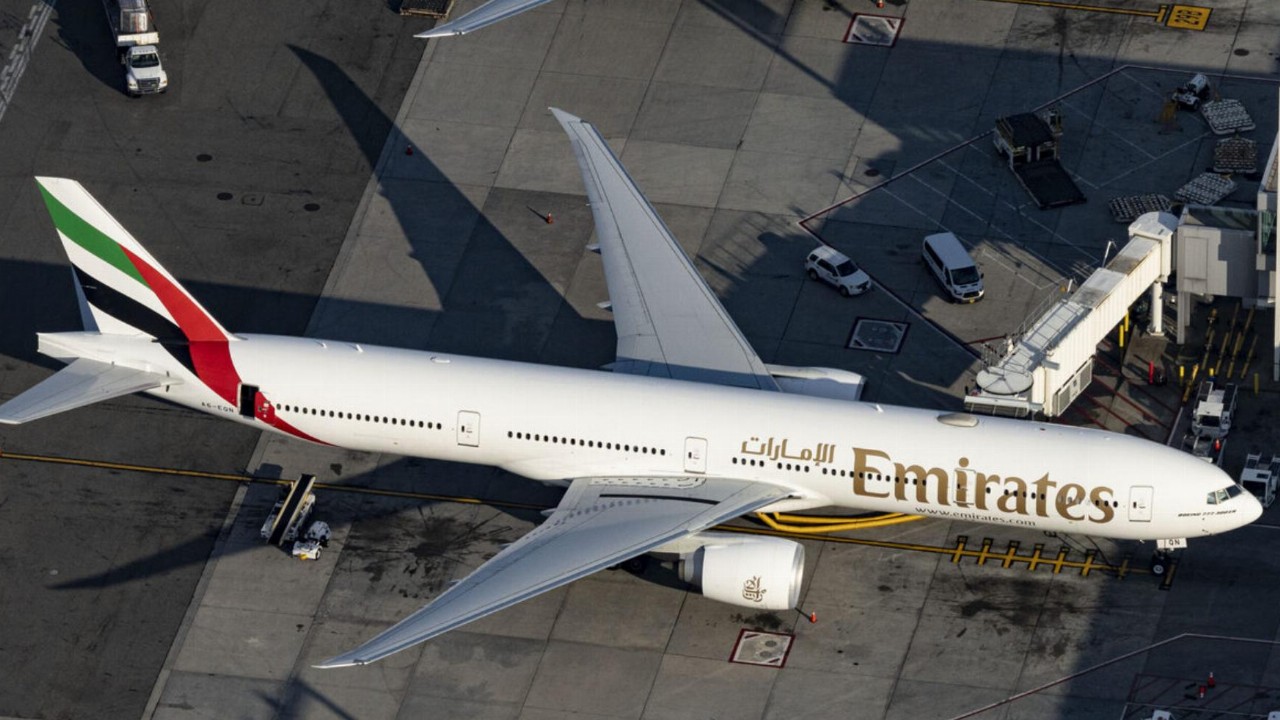
- Emirates has made an about-face on its plan to stop flying to Australia’s east coast amid a COVID-19 related arrivals cap
- Less than a week ago the airliner announced it would suspend passenger flights to Sydney, Melbourne and Brisbane due to the restrictions
- Those flights have since been re-instated from next week and Emirates has issued an apology to affected customers
- Currently, only 2000 people are allowed to arrive in Australia from overseas each week, so as not to overwhelm the hotel quarantine system
- Additionally, the Federal Government is reducing the number of arrivals to stop the highly-contagious U.K. strain of the virus from spreading
Emirates has made an about-face on its plan to stop flying passengers to Australia’s east coast.
The airliner announced last week it was going to suspend flights to Sydney, Melbourne and Brisbane amid a COVID-19 related arrivals cap.
Additionally, the company cited concerns around new cabin crew quarantine rules as a reason to abandon the, on average, 19 flights per week.
But, in a backflip, the airliner has since reversed the decision and announced it will resume flights to the east coast from next week.
Emirates also issued an apology, stating “we regret the inconvenience caused to our customers in the period where we had to temporarily suspend our services.”
“The pandemic has made international flying incredibly challenging, and the dynamic restrictions and requirements implemented by the different state authorities in Australia had added complexity and burden to our operations,” the airliner explained in a statement.
“This led us to temporarily suspend passenger services while we engaged with various stakeholders regarding crew protocols and other operational details,” Emirates added.
Currently, only 1500 people are allowed to arrive in NSW each week, while 500 are allowed into Queensland and WA.
The measures were first brought in last year to try and stop the hotel quarantine system being overwhelmed.
Since then, the Federal Government has decided to reduce them further in a bid to stop the highly-contagious UK strain of the virus from spreading.
Additionally, passengers from overseas will need to test negative for COVID-19 in order to travel to Australia from January 22.