

- Australian lithium mine output forecast to grow by around 8.8% a year to 2031
- Australia leading global supply growth
- Lithium export earnings to increase to over $17 billion in 2026– 27
- Lithium prices recovered strongly over the past year
The rebound in lithium prices is set to see Australian export earnings for the critical metal almost double this year according to new government figures.


Australia’s lithium export earnings are forecast to increase from nearly $10 billion in 2025–26 to more than $17 billion in 2026– 27 driven by higher prices and increased export volumes, according to the latest report from the Federal Department of Industry, Science and Resources (DISR)
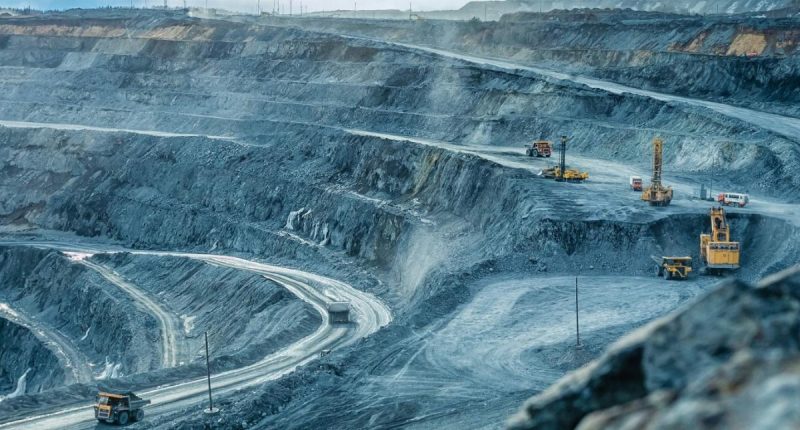
Australian lithium mine output is projected to grow by about eight per cent a year, driven by expansions at the Pilgangoora, Greenbushes, Mt Holland and Mt Marion projects in Western Australia.
Pilgangoora highlighted that growth opportunity last week when PLS announced a positive final investment decision (FID) for a significant expansion of the project.
The approval for the P2000 project will increase Pilgangoora spodumene concentrate production to approximately 2.0 million tonnes per annum (Mtpa) through construction of a new Jimmagunya processing plant.
PLS also released a substantial 31% increase in the ore reserve and an updated mineral resource for the Pilgangoora operation.
The ramp up of Australian lithium mining operations comes as prices have recovered strongly over the past year, according to the Australian Department of Industry, Science and Resources’ recently released Resources and Energy Quarterly.
Spodumene prices rose from an average of around US$720 a tonne in July 2025 to US$2,200 a tonne in July 2026,while lithium hydroxide prices more than doubled to average US$19,100 a tonne over the same period the September quarterly.
Australia’s mined lithium output increased by 7.4% in the June quarter 2026 compared with the same period in 2025 reflecting ramp-ups at Mt Holland and Kathleen Valley.
Mine production is forecast to grow by 8% a year to 2031, reaching around 5,800 kt, supported by expansions at Greenbushes, Pilgangoora, Mt Holland and Mt Marion, while DISR noted that restarts at Bald Hill and Finniss could add to Australian production.
Australian lithium producers are pursuing downstream processing opportunities despite challenging refining economics. Pilbara Minerals has commenced commissioning of its Mid-Stream Demonstration Plant, with first lithium phosphate production expected by the time this publication is released. Other producers are also assessing opportunities to capture greater value from Australia’s lithium resources.
Meanwhile, Australia’s lithium hydroxide production increased by 83% in the June quarter 2026 compared with the same period in 2025, reflecting first production from the Covalent refinery and ramp-up at IGO/Tianqi’s Kwinana facility.
DISR noted that despite Albemarle placing Kemerton in care and maintenance in 2026, lithium hydroxide output is expected to grow to around 53 kt by 2031, up from around 25 kt in 2025.
Lithium hydroxide export earnings are forecast to increase from around $0.5 billion to more than $1.3 billion over the same period.
While Australia’s lithium export earnings are forecast to peak at $16.6 billion in 2026–27, they are forecast to ease to $13.6 billion in 2030-31 as prices moderate, with spodumene accounting for most export value.
The DISR report highlighted the uncertainty over the restart of CATL’s Jianxiawo lithium mine in China as increasing the risk of tighter market conditions through 2027.
The mine has been suspended since August 2025, affecting around 60 kt of lithium carbonate equivalent supply. Combined with regulatory reviews of other Jiangxi operations, prolonged disruptions could significantly reduce the expected surplus in 2026 and bring forward market rebalancing.
Meanwhile, global lithium consumption is projected to grow by more than 11% a year to 2031, supported by continued electric vehicle (EV) adoption and rapid deployment of battery energy storage systems.
The DISR quarterly forecast is for continued global lithium supply growth, led by new expansions in Australia, China and Argentina. This will lead to an increase by 7.3% annually, almost 2.4 million tonnes (Mt) of lithium carbonate equivalent (LCE) by 2031
Australia, Argentina and China are forecast to account for most of this gain, with China forecast to overtake Australia in lithium extraction in 2026.
China’s share of global lithium carbonate output is forecast to rise from about 62% in 2026 to 65% in 2031, driven by continued expansion of hard-rock conversion capacity and slower growth among other major producers. China is also expected to remain the dominant producer of including lithium hydroxide, accounting for two-thirds of global output in 2031.
According to a recent International Energy Agency (IEA) Global EV Outlook, international electric car sales are expected to reach 23 million units in 2026, accounting for nearly 30% of all car sales worldwide.
The EIA reported that global EV sales grew by 21% in 2025, led by China and the EU. By 2031, annual sales are projected to reach around 17 million vehicles in China and 6.6 million in the EU.
However, growth in the US is expected to be more moderate following the expiry of EV tax credits.
Rapid BESS deployment is continuing to provide an increasingly important source of lithium demand. Global additions reached 108 GW in 2025, up 40% from 2024, while installed capacity has increased more than elevenfold since 2021. Growth is predominantly supported by lithium iron phosphate batteries.
The material provided in this article is for information only and should not be treated as investment advice. Viewers are encouraged to conduct their own research and consult with a certified financial advisor before making any investment decisions. For full disclaimer information, please click here.