

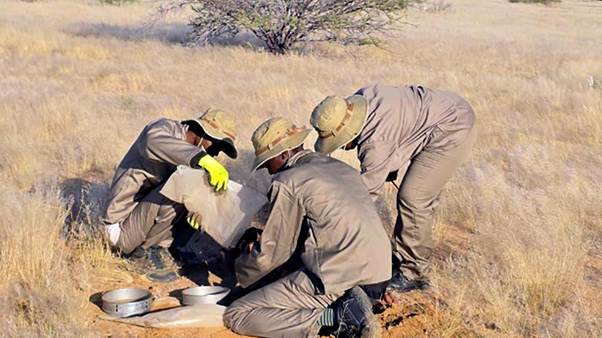
Askari Metals (ASX:AS2) has spent the last few months laying the groundwork in Ethiopia. Now, the ASX-listed explorer is approaching the point where the story stops being about prep and starts being about drill core.
Listen to the HotCopper podcast for in-depth discussions and insights on all the biggest headlines from throughout the week. On Spotify, Apple, and more.
The flagship Nejo Copper-Gold Project in central western Ethiopia is the company’s lead value driver, and the next stretch of news is its key re-rating test. Final approvals are expected to move Nejo from planning into on-ground execution quite soon, unlocking a first-phase diamond drilling program of ~5,000 metres across high-priority targets at Guji and Komto One and Two.
For a junior explorer, that transition matters. Approvals, mobilisation and assays are measurable milestones; the kind that let investors judge whether a project’s historical potential holds up under modern scrutiny.
For Askari, it’s all lining up exactly how they want before the campaign begins. And it all starts with Nejo, which is far from a grassroots gamble.
Brownfields, not blue sky
Let’s have a look at Nejo. The project combines a large landholding — 1,174 square kilometres in the Arabian–Nubian Shield — with historical drilling and trenching, all in a recognised regional address. The tenure surrounds the 1.7Moz Tulu Kapi mine and lies on the same greenstone belt as the 3.4Moz Kurmuk.
Nejo’s historical gold-copper footprint was generated by earlier operators, and historic RC and diamond drilling, trenching, and sampling at Guji, Komto One, and Komto Two returned near-surface mineralisation with limited follow-up. Askari’s first job is to convert that legacy into modern, drill-backed evidence.
“Job one” already well underway
The Oz explorer has started that quest in its first phase. Selected historical holes will be twinned to validate the old numbers, before the rigs step out along strike and laterally toward a more systematic resource-definition pathway.
The ~5,000m opener also forms part of a broader phased strategy — the company has flagged it as the first tranche of a proposed 20,000-metre campaign.
If the twinning works and continuity emerges, the big prize is a multi-million-ounce resource definition pathway and a potential maiden JORC resource.
A clean balance sheet behind the drilling
Of course, execution needs funding, and Askari has been busy on that front as well. During the December quarter, the company raised $2.75M (before costs) through an oversubscribed rights issue and private placement, repaid all outstanding convertible and redeemable notes, and then exited its Australian assets.
Those moves through the end of the last calendar year and early in CY26 have left Askari debt-free and ready to squarely focus on African exploration.
Leading the charge is executive director Gino D’Anna, who brings public company, resource exploration and capital-raising experience, backed by a board with African project and corporate transaction backgrounds. In frontier jurisdictions, that mix of capital markets nous and in-country experience is the difference between approvals stalling and companies collapsing, and rigs turning properly.
Nejo not the only project in play either
While Nejo does carry Askari’s re-rating weight, the Uis polymetallic project in Namibia gives the portfolio a second source of news as well. Uis offers exposure to everything from tin and lithium to tantalum, rubidium, and caesium; a critical minerals basket that keeps the company relevant to a separate thematic entirely.
And Uis’ location helps, too. The project sits near Andrada Mining’s operating Uis tin mine, with infrastructure support and access to the Walvis Bay port. Askari is advancing low-cost, high-impact workstreams across priority pegmatite targets, including soil geochemistry, trenching, and follow-up drilling, all of which can be the steady exploration activity that fills the gaps between Nejo headlines.
The trigger investors will be watching
And that brings us to where Askari is today, and what we’re waiting for over the next six to twelve months as the explorer really gets underway.
The docket reads as follows: Final approvals and access confirmation at Nejo, mobilisation, commencement of the ~5,000m first-phase diamond program, updates from Guji and Komto One and Two, first assays validating historical holes, then step-out drilling. Uis exploration will run at the same time.
That’s a whole heap of news flow, and plenty of excitement on the horizon for the ASX-listed explorer. Every milestone Askari works past shifts the story again, away from project messaging and closer to measurable execution.
The questions investors should be asking are simple: does the historical mineralisation validate, does it show continuity, and can Nejo move toward resource definition?

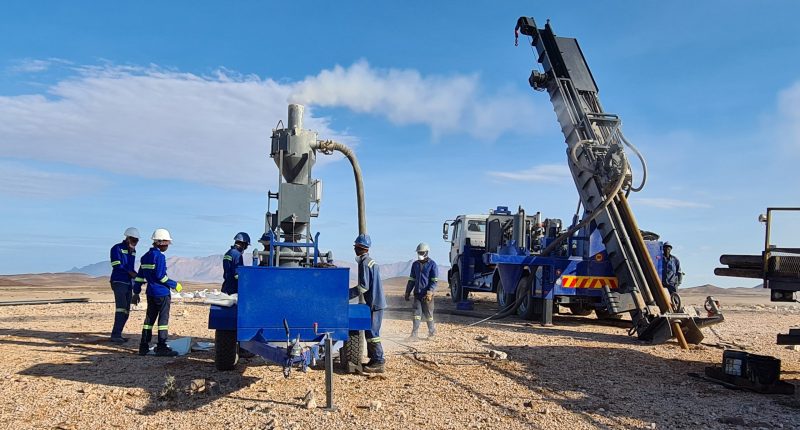
The answer is on the way. Approvals are the gate. Once cleared, the drill bit takes over — and for a company positioned beside 5.1Moz of neighbouring endowment, that’s when the Australian market starts paying attention.
For our HotCopper readers, you can pay attention much sooner.
Join the discussion: See what HotCopper users are saying about Askari Metals Ltd and be part of the conversations that move the markets.
Disclaimer: This article is disseminated in partnership with Askari Metals Ltd. It is intended to inform investors and should not be taken as financial advice.
The material provided in this article is for information only and should not be treated as investment advice. Viewers are encouraged to conduct their own research and consult with a certified financial advisor before making any investment decisions. For full disclaimer information, please click here.