

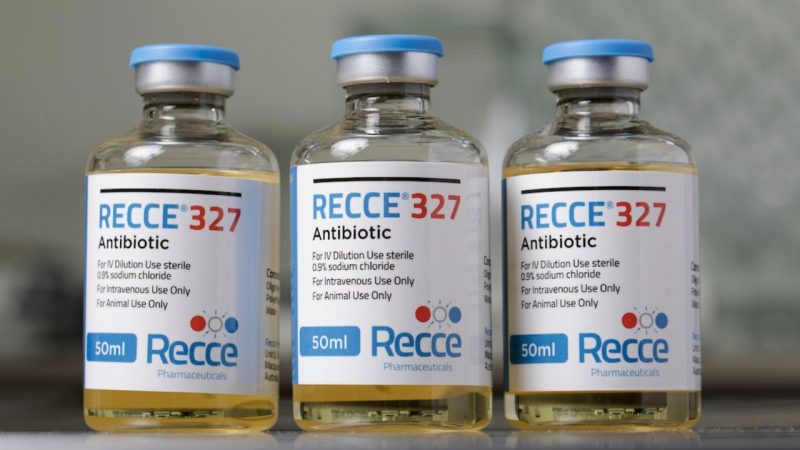
- Recce Pharmaceuticals (RCE) reports its R327 gel product saw one elderly patient avoid amputation of an infected toe
- The company also cited two other patients with antibiotic-resistant infections who both responded well to the treatment with wounds drying up and swelling subsiding in under a month
- Gel was applied to each wound daily
- The trial was small and consisted of only five patients with Recce reiterating results can only be “considered anecdotal”
- Shares closed at 70 cents on Thursday
Recce Pharmaceuticals (RCE) has reported additional positive patient outcomes for individuals using the company’s Recce 327 Gel (R327G).
The treatment is currently under use in an ongoing Therapeutic Goods Administration (TGA) Special Access Scheme program, with the TGA serving as Australia’s counterpart to the US FDA.
A total of five patients received treatment under this program, and all of them exhibited complete eradication of antibiotic-resistant infections, a significant achievement in a world where drug-resistant microorganisms are becoming increasingly prevalent.
The company is now preparing for clinical trials involving the topical application of R327G.
The program focused on five patients with gram-positive and gram-negative bacterial infections.
ram-negative infections can lead to pneumonia and bloodstream infections, while gram-positive bacteria include Staphylococcus and Streptococcus, which, while naturally occurring in the body, pose significant risks in hospital settings when open surgery wounds become contaminated.
It’s important to note that R327G remains an experimental product and is not currently approved for market use in humans.
However, the TGA program has marked the initial step towards clinical acceptance.
Nonetheless, the company emphasised that the results reported today must be regarded as anecdotal.
The company highlighted three patients in today’s news.
The first patient was a 51-year-old woman who developed a significant wound infection following ankle surgery.
After applying R327G for three weeks, the patient’s foot had healed with no sign of bacterial infection.
The second patient, who required an above-knee leg amputation following a 2017 accident, had an infected bone ingrowth metal implant at the site of perforation on the left thigh bone.
Antibiotics had previously failed to treat the infection. However, after only three days of applying R327G, the wound began to dry up, and after two weeks, there were no signs of redness or swelling.
The third patient, an 84-year-old, developed a bone infection on his left big toe that did not respond to antibiotics.
Similar to the second patient, the wound site dried up after three days of R327G application, and after one week, the treatment had completely dried the wound with no sign of worsening swelling. The company believes R327G treatment prevented the need for amputation in this case.
“We are thrilled to see R327G having a real-life impact with patients, especially those not responding to commonly used antibiotics thanks to the TGA’s special access scheme. We look forward to building upon these successes among the present and future clinical trials ahead,” RCE CEO James Graham said.
RCE shares closed at 70 cents on Thursday.