
Join our daily newsletter At The Bell to receive exclusive market insights
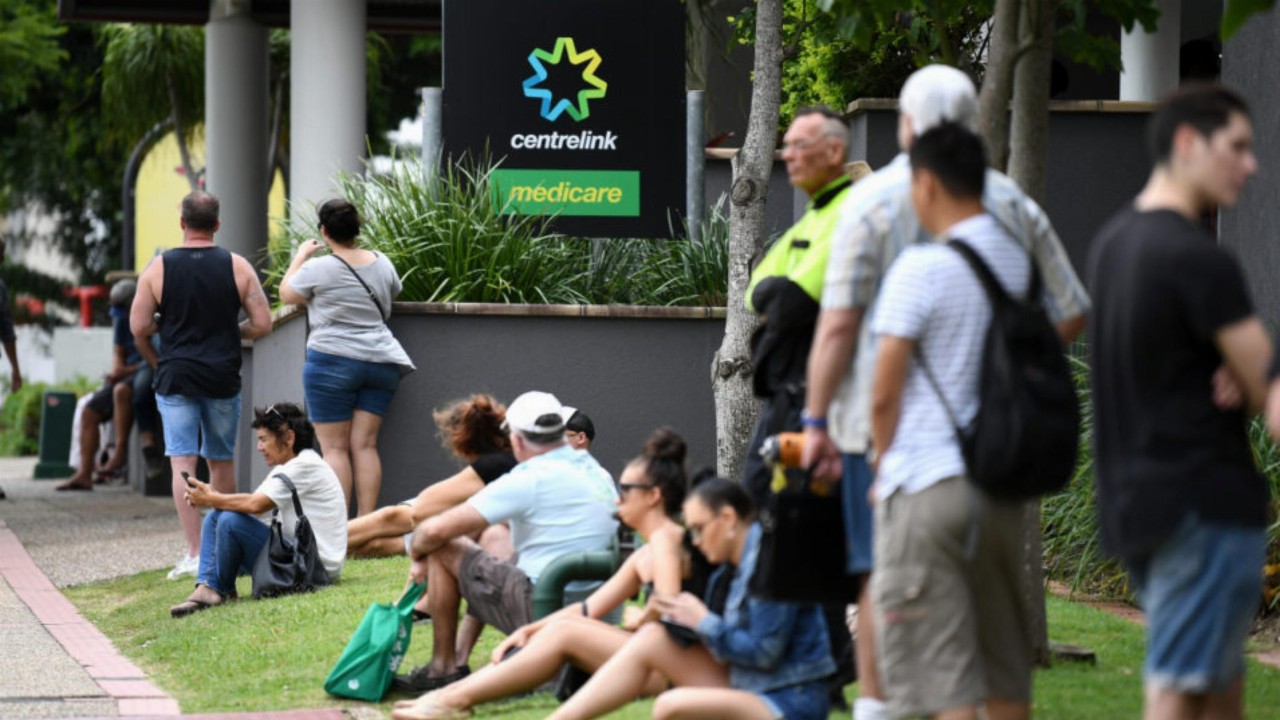
- The unemployment rate has fallen from 7.5 per cent in July to 6.8 per cent in August according to labour force data from the Australia Bureau of Statistics
- The number of people out of work and actively looking for employment surpassed one million for the first time in July and in August fell to 921,800
- More than 110,000 jobs were added over the month, female employment growth accounted for 67,000 of those positions
- Not all states and territories were tracking in the same direction, with South Australia experiencing no change and both Victoria and Tasmania recording an increase in unemployment
- Underemployment, on the other hand, remained at 11.2 per cent
The unemployment rate has fallen from 7.5 per cent in July to 6.8 per cent in August according to the Australian Bureau of Statistics.
The number of people out of work and actively looking for employment surpassed one million for the first time in July and in August fell to 921,800.
Underemployment, on the other hand, remained steady at 11.2 per cent.
Hours worked
More than 110,000 jobs were added over the month, while the increase in hours worked was much milder as ABS Head of Labour Statistics Bjorn Jarvi explained.
“Employment rose almost 1 per cent but hours worked rose by a more modest 0.1 per cent. Hours fell by 4.8 per cent in Victoria, compared to a 1.8 per cent increase across the rest of Australia.”
“The weaker increase in hours worked has also been reflected in the strength of the increase in part-time employment between May and August, which has been almost eight times greater than the increase in full-time employment,” Bjorn said.
Male and female employment
Female employment growth was also stronger, accounting for 67,000 positions, whereas male employment grew by 44,000.
“Hours worked also increased for females, with no change for males, and remained around 4.7 per cent and 5.9 per cent below March respectively,” Bjorn added.
Comparison by states and territories
Labour force data shows, however, that not all states and territories saw employment growth. South Australia experienced no change with its unemployment rate tracking sideways from July to August at 7.9 per cent.
Victoria’s unemployment rate increased with the state in stage four lockdown, from 6.8 per cent in July to 7.1 per cent a month later. Tasmania also recorded a 0.3 per cent rise in unemployment to 6 per cent in August.
On the other hand, Queensland – the state with the highest unemployment rate in July – saw a 1.3 per cent decrease in the measure to 7.5 per cent in August.
International comparison
When looking further afield, Australia has faired well during the COVID-19 pandemic in terms of both case numbers and the impact on employment.
Australia had recorded 26,813 COVID-19 cases and 832 deaths as of September 17, 2020, according to John Hopkins. Canada has recorded 141,852 cases and 9,244 deaths and the United States, 6,629,880 cases and 196,752 deaths.
Canada’s unemployment rate rose from 5.6 per cent in February, hit 13.7 per cent in May and since declined to 10.2 per cent in August.
In the United States, unemployment sat at 3.5 per cent in February, soared to 14.7 per cent in April and retreated to 8.4 per cent by August.
Whereas in Australia, unemployment rose from 5.1 per cent in February, peaked at 7.5 per cent in July before dipping to 6.8 per cent in August.