
Join our daily newsletter At The Bell to receive exclusive market insights
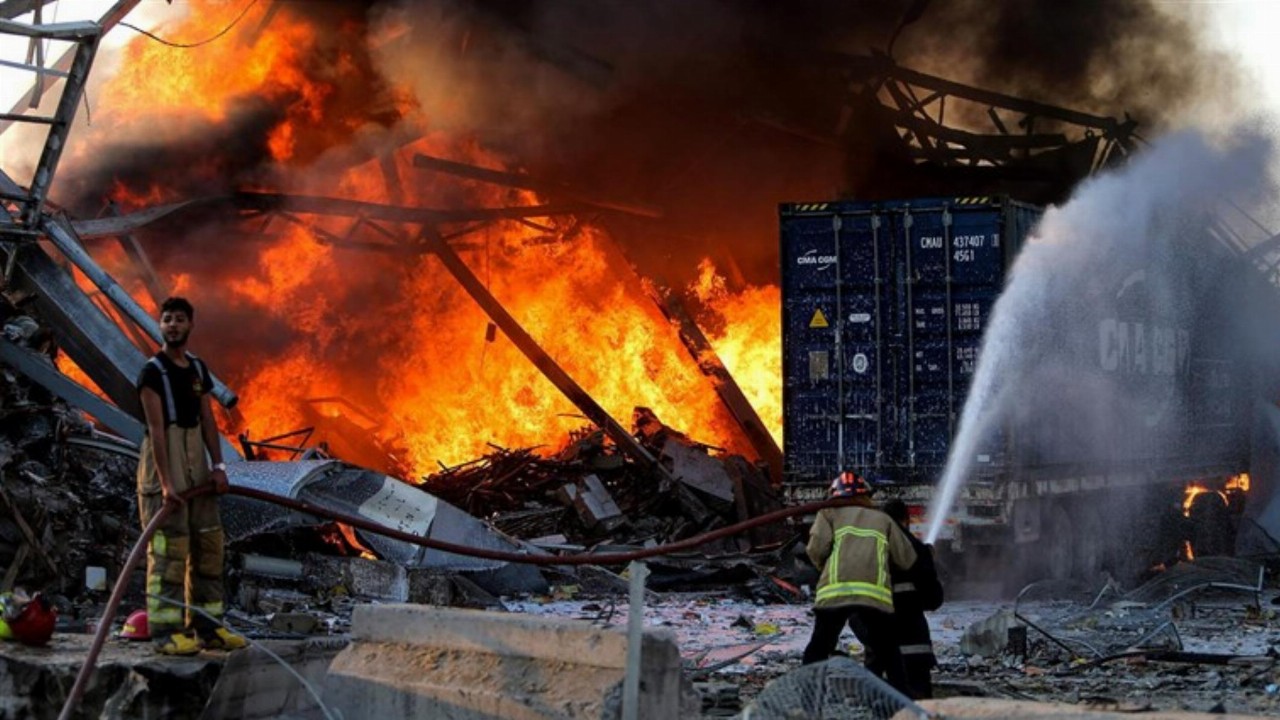
- A huge explosion in the port of Beirut, Lebanon, has caused widespread damage and multiple fatalities
- It’s thought that significant quantities of ammonium nitrate stored at the port may have been the cause of the blast
- The explosion was felt as far away as Cyprus, which lies 234 kilometres across the Mediterranean Sea
- St Joseph’s hospital, which sits within two kilometres of the port, sustained considerable damage
- The incident could not have come at a worse time for Lebanon, which is already struggling with an economic crisis
- Within hours of the explosion, Lebanon’s Health Minister had already confirmed 30 deaths and more than 3000 injured
In the early evening of Tuesday, August 4, a catastrophic explosion ripped through the port area of Beirut, Lebanon.
Video footage from the incident has been widely shared on social media, documenting the extent of the blast, which was felt as far away as Cyprus, some 234 kilometres across the Mediterranean Sea.
“Balconies were blown off buildings. Glass in high-rise buildings shattered and fell to the street,” an eyewitness said to Reuters news agency.
Lebanese Red Cross official, Georges Kettaneh, said early on that there were “hundreds of casualties” in the city, including a number of fatalities.
This has been compounded by reports that St Joseph’s hospital, less than two kilometres away from the port, had sustained significant damage.
“They’re bringing people to the hospital but we can’t treat them,” one doctor said. “They’re leaving them outside in the street. The hospital is broken, the ER is broken.”
Initial explanations surrounding the cause of the explosion were vague and conflicting. Theories ranged from accidentally ignited fireworks to compromised stores of ammunition.
Speculation also surfaced regarding Israel’s involvement, following a recent cross-border altercation between the two countries. But this explanation was quashed by Major General Abbas Ibrahim, director of Lebanon’s General Security, who said that the most likely cause of the blast was a depot at the port, where highly explosive materials had been stored.
This theory was further supported by the country’s Interior Minister, Mohamed Fehmi, who told MTV Lebanon that “huge quantities of ammonium nitrate” stored at the port appeared to have been the cause.
Amid the chaos that followed, Marwan Abboud, Governor of Beirut, arrived at the scene and broke down in tears while speaking to reporters. He told Lebanese journalists that he had come to search for firefighters who were battling a blaze just before the explosion.
“This reminds me of what happened in Japan, to Hiroshima and Nagasaki,” he said. “I’ve never seen damage of this size and width, and so catastrophic. This is a national catastrophe.”
Such an event could not have come at a worse time for Lebanon. Just hours prior, anti-government protestors clashed with security forces outside the ministry of energy, demanding accountability from the country’s leaders.
COVID-19 has added further injury to longstanding accusations of government corruption and financial mismanagement, while, since March, the price of most goods has tripled and Lebanon’s currency has fallen by 80 per cent.
Tensions are also on edge ahead of Friday’s verdict in the trial of four suspects for the bombing that killed former Prime Minister, Rafik Hariri, in 2005.
Within hours of the explosion, Lebanon’s Health Minister had confirmed 30 deaths and more than 3000 injured. But this is expected to increase as emergency services work to manage the disaster.