

Join our daily newsletter At The Bell to receive exclusive market insights
- The Federal Government has announced $270 billion will be spent on defence over the next decade
- The funds will be used to create new ADF positions, update strike weapons and cyber capabilities, and create a high-tech underwater surveillance system
- Prime Minister Scott Morrisson also announced a change in focus for the nation, as COVID-19 changes the global landscape
- The PM wants Australia to focus on Indo-Pacific relations, amid growing competition in the region and the U.S.’s tension with China
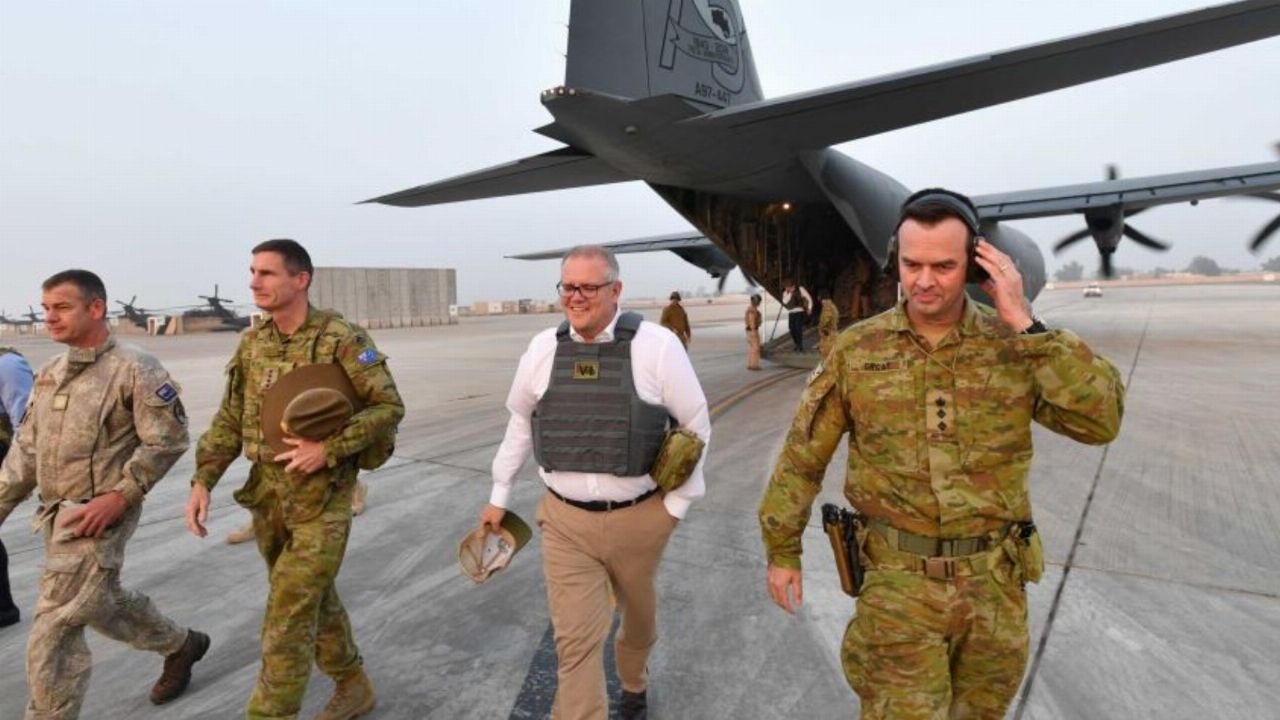
Prime Minister Scott Morrison has announced $270 billion will be spent on defence, as Australia faces increasing military competition within the Indo-Pacific region.
The Prime Minister also said the coronavirus had changed the globe, and in its wake, the world could be very different.
“Even as we stare down the COVID pandemic at home, we need to also prepare for a post-COVID world that is poorer, that is more dangerous, and that is more disorderly,” he said.
Boosting our capabilities
The funds, which don’t represent an increase in defence spending in real terms, will be spent on acquiring updated strike weapons, boosting cyber capabilities and creating a high-tech underwater surveillance system.
This includes spending $800 million to buy a Long Range Anti-Ship Missile from the U.S.
Meanwhile, between $5 billion and $7 billion will be spent on the underwater system, which aims to boost our defence capabilities in the short term, while submarines are built.
The money would also be spent on hiring new ADF members, with an extra 800 army recruits expected to be hired over the next 10 years.
Despite defence spending remaining unchanged, at 2 per cent of Australia’s GDP, today’s announcement did signal a shift in focus for Australia.
Indo-Pacific tension
Defence Minister Linda Reynolds said Australia’s focus would narrow in on the Indo-Pacific, amid heightened strategic competition in the region.
The Minister said the updated plan would enable defence forces ‘to shape our strategic environment, deter actions against our interests and respond with credible force when necessary’.
COVID-19 wasn’t the only threat singled out by the Federal Government, with China’s trade war with the U.S. labelled a huge concern.
“The prospect of high-intensity military conflict in the Indo-Pacific is less remote than at the time of the 2016 defence white paper, including, importantly, high-intensity military conflict between the United States and China,” Prime Minister Morrison said.
His call comes as U.S. President Donald Trump took aim overnight at China for its role in the COVID-19 pandemic.
As I watch the Pandemic spread its ugly face all across the world, including the tremendous damage it has done to the USA, I become more and more angry at China. People can see it, and I can feel it!
— Donald J. Trump (@realDonaldTrump) June 30, 2020
Wuhan, a province within China, is believed to be the epicentre of the coronavirus, with COVID-19 first reported among residents there late last year.
The Australian Government wants an independent inquiry into how the virus came to be, and whether China could have done more to contain it.
In response to the inquiry push, Beijing imposed tough new tariffs on Australia barley producers and beef exporters.