
Join our daily newsletter At The Bell to receive exclusive market insights
- Rising temperatures have caused the last intact ice shelf in the Canadian Arctic to break off and disintegrate
- Satellite shots confirm the shelf — which is larger in size than Manhattan — broke off in late July this year
- Officials in the area say rising temperatures are mostly to blame for the ice shelf melting and breaking off
- The Arctic has recently experienced a heatwave, with temperatures of 38 degrees recorded in Siberia
- In the meantime, scientists said unless temperatures were to lower, further ice breaks were expected in the region
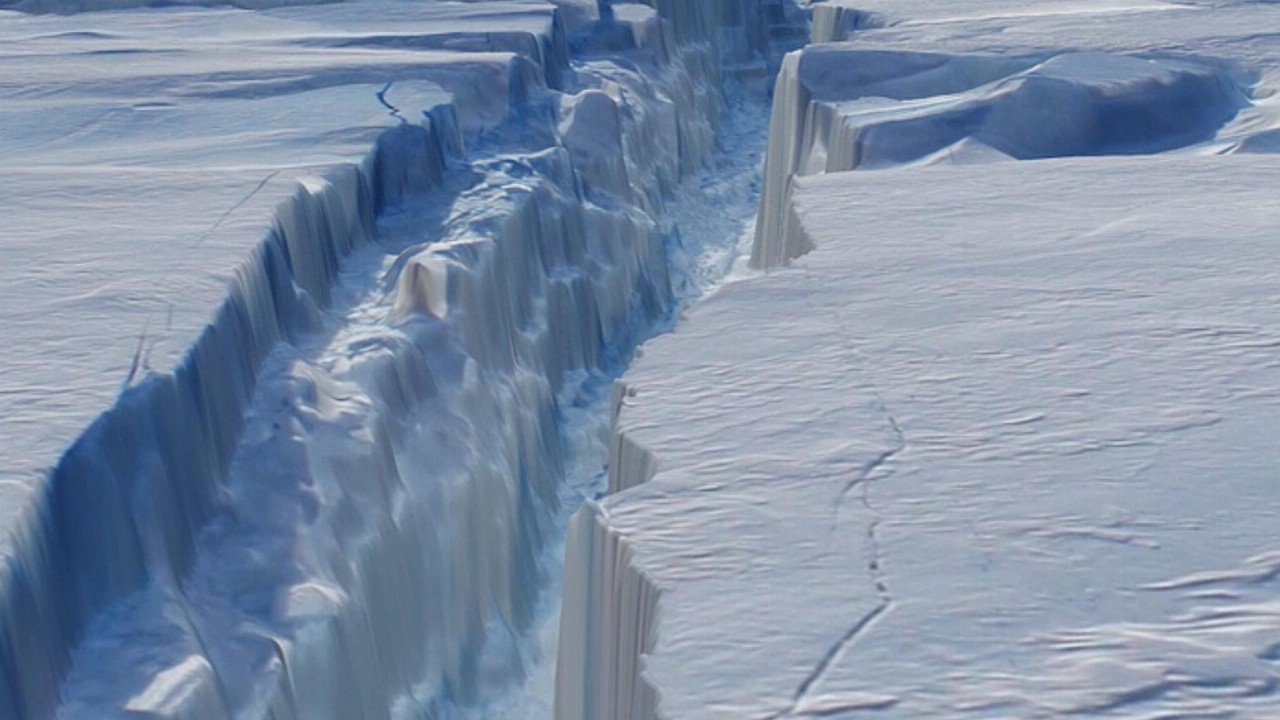
The last intact ice shelf in the Canadian Arctic has broken off and disintegrated into the ocean, with rising temperatures in the region being blamed for the collapse.
The Canadian Ice Service announced last week an almost 80 square kilometre section of the Milne Ice Shelf had collapsed
A huge section of the Milne #IceShelf has collapsed into the #Arctic Ocean producing a ~79 km2 ice island. Above normal air temperatures, offshore winds and open water in front of the ice shelf are all part of the recipe for ice shelf break up. #MilneIceIsland #Nunavut #seaice pic.twitter.com/fGfj8Me9tA
— ECCC Canadian Ice Service (@ECCC_CIS) August 2, 2020
The shelf is located on the edge of Ellesmere Island, which resides in the northern Canadian territory of Nunavut.
Satellite images from NASA confirmed the shelf break up, which at 79 square kilometres is larger in size than the New York City island of Manhattan, which clocks in at 60 square kilometres.
Officials said following the collapse, the 4000-year-old Milne Ice Shelf had almost halved in size, reducing by 43 per cent.
Satellite animation, from July 30 to August 4, shows the collapse of the last fully intact #iceshelf in #Canada. The Milne Ice Shelf, located on #EllesmereIsland in #Nunavut, has now reduced in area by ~43%. #MilneIceIsland #seaice #Arctic #earthrightnow #glacier pic.twitter.com/jjs1gawoxA
— ECCC Canadian Ice Service (@ECCC_CIS) August 4, 2020
The recent break is being blamed on a number of factors, but primarily it’s due to a rise in air temperatures in the region.
The arctic is currently in the midst of a heatwave, with temperatures as high as 38 degrees recorded in Siberia in June.
More broadly, the region has also been subject to rising temperatures for the last six years running.
Scientists also recently revealed annual temperatures in the Arctic were increasing at more than double the rate as the rest of the world.
This has caused disruptions on the Milne shelf, with wind and growing open-water spaces also blamed for the recent break-off.
Speaking to the collapse, University of Ottawa Glaciologist Luke Copland told CBS News there was a clear link here to climate change.
“This drastic decline in ice shelves is clearly related to climate change,” he said.
“This summer has been up to five degrees warmer than the average over the period from 1981 to 2010, and the region has been warming at two to three times the global rate,” he added.
The Canadian-based glacier expert also warned further break-offs were inevitable at this stage.
“The Milne and other ice shelves in Canada are simply not viable any longer and will disappear in the coming decades,” he said.