
Join our daily newsletter At The Bell to receive exclusive market insights
- Brexit trade negotiation talks are being pushed into the eleventh hour as the United Kingdom and the European Union strive to avoid a no-deal exit
- Leaders of the two parties had until Sunday night to reach a deal, but this deadline has been extended to the end of the year
- With the U.K. slated to leave the E.U. on January 1, 2021, it has just over two weeks to strike a deal or leave the bloc without one
- A no-deal exit means the U.K. and the E.U. will need to trade on standard World Trade Organisation (WTO) terms
- This means tariffs will be slapped on several products and fishing rights we be under major threat
- Nevertheless, even if a trade deal is not reached before the U.K. leaves the bloc, this does not mean the leaders of the two parties can never sign a trade deal again; it’s likely trade talks will continue throughout 2021.
Brexit trade negotiation talks are being pushed into the eleventh hour as the United Kingdom and the European Union strive to avoid a no-deal exit.
Leaders of the two parties had a Sunday deadline to come to terms on a deal, but they have yet to reach an agreement.
The U.K. left the bloc in January 2020 but will remain an unofficial member until the end of the year. This means if a trade deal isn’t reached before December 31, the U.K. will leave the E.U. on January 1, 2021, with no trade deal between them.
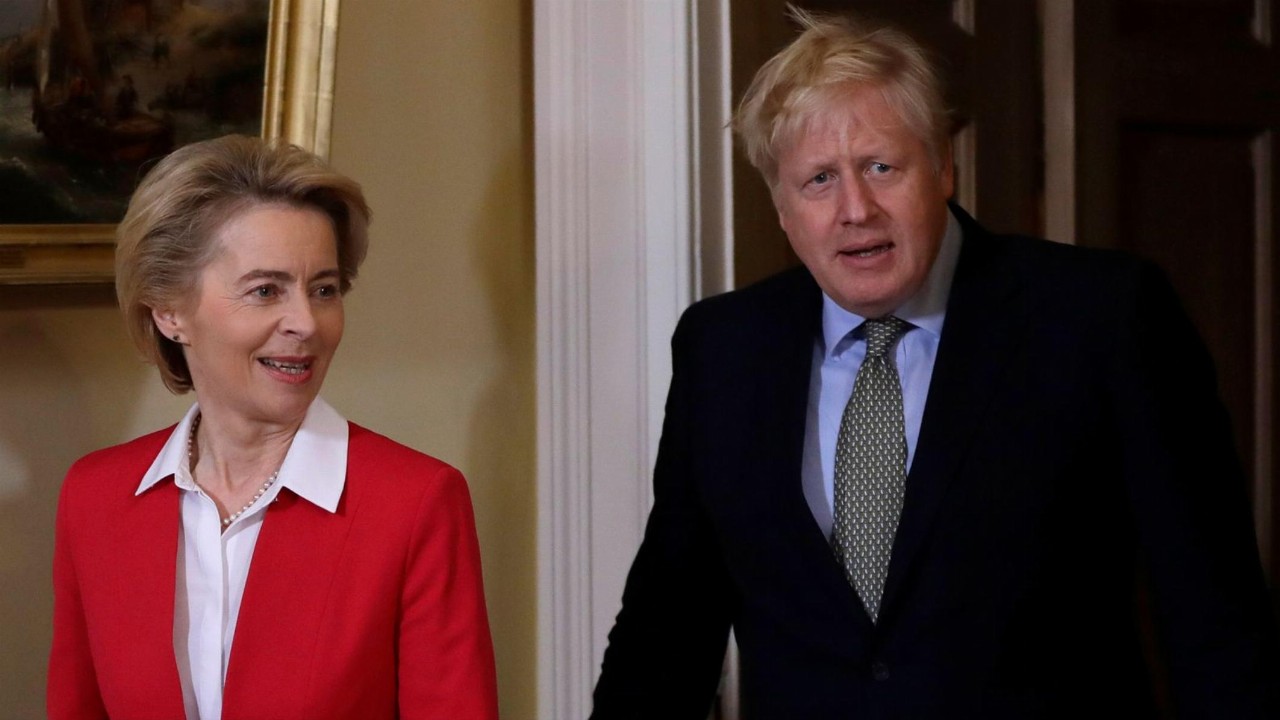
This was once just a distant fear, but British Prime Minister Boris Johnson and E.U. Commission President Ursula von der Leyen said on Friday a no-deal exit was now likely.
Still, both parties have agreed to continue talks until the last possible moment to come to like terms.
“Despite the exhaustion after almost a year of negotiations, despite the fact that deadlines have been missed over and over, we think it is responsible at this point to go the extra mile,” the pair said in a joint statement on Sunday.
“We have accordingly mandated our negotiators to continue the talks and to see whether an agreement can even at this late stage be reached.”
This comes after President von der Leyen said Britain and the E.U. had a “lively and interesting”discussion last week.
“We gained a clear understanding of each other’s positions. They remain far apart,” she said.
What does a no-deal exit mean?
Effectively, a no-deal exit simply means the E.U. and the U.K. will treat each other as they would any other country — no special favours or exemptions for citizens of either economy.
In this respect, the potential for a no-deal exit is unlikely to have a dramatic impact on either party; relations between the U.K. and the E.U. will likely still be amicable, trade will still be allowed, and people can still visit countries outside of their respective union.
However, a no-deal exit means that the U.K. and the E.U. will need to trade on general World Trade Organisation (WTO) terms — meaning standard tariffs would be applied on U.K. imports to the E.U., likely around 2.8 per one for non-agricultural products but up to 10 per cent for vehicles and 35 per cent for dairy products.
The U.K. would, in turn, slap some of its own tariffs own imports from the E.U. — generally meaning most trade will immediately become more expensive.
This also means standards for food and medicine in the U.K. may not be acceptable in the E.U., which may cause U.K. imports to be stopped at the border and sent back. On this note, border checks will increase, meaning there could be major delays for drivers between the nations.
Further, fishing rights in the U.K. and E.U. — which have been a particularly important topic of the trade talks — could come under threat. Without a trade deal, non-U.K. fishing boats would lose access to U.K. waters, and vice-versa, putting substantial pressure on the industry and sending the price of seafood up.
Essentially, the concern of a no-trade exit is an immediate blow to European economies and financial markets, and causes uncertainty around supply chains and borders.
Of course, just because a trade deal is not reached before the U.K. leaves the bloc does not mean the leaders of the two parties can never sign a trade deal again; it’s likely trade talks will continue throughout 2021.
The fear, then, is what the economic impact will look like in the months before a deal can be signed.