
Join our daily newsletter At The Bell to receive exclusive market insights
- The consumer watchdog extends Australia’s ban on advertising infant formula while citing fresh concerns around toddler milk products
- Under the Marketing in Australia of Infant Formula (MAIF) agreement, manufacturers are not allowed to advertise baby formula to consumers
- According to the Australian Competition and Consumer Commission (ACCC), this is to protect breastfeeding rates in Australia
- However, the World Health Organisation warns that toddler milk products could be used as a proxy to advertising infant formula
- As such, the ACCC says it has encouraged the Department of Health to consider these issues in an upcoming review of the MAIF agreement later this year
The consumer watchdog has this week extended Australia’s ban on advertising infant formula while citing fresh concerns around toddler milk products.
The Australian Competition and Consumer Commission (ACCC) reauthorised an agreement with infant formula manufacturers which that prohibits them from advertising and promoting baby formula directly to the public.
The Marketing in Australia of Infant Formula (MAIF) agreement has been in place since 1992 and is designed to ensure breastfeeding rates in Australia remain high. The agreement has now been extended to July 31, 2024.
ACCC Deputy Chair Delia Rickard said without this agreement, there is a risk that baby formula makers would promote their products directly to consumers and potentially lower breastfeeding rates.
“A continued ban on infant formula advertising is likely to result in public benefits by protecting rates of breastfeeding, which has significant public health benefits,” Ms Rickard said.
According to the World Health Organisation (WHO), breastfeeding is one of the most effective ways to ensure child health and survival.
Breastmilk provides all the necessary nutrients infants need in their first months of life, and breastfed children typically perform better on intelligence tests, are less likely to be overweight, and are less prone to diabetes and other health conditions later in life.
For mothers, breastfeeding has been shown to reduce the risk of breast and ovarian cancers, according to the WHO.
As such, by banning advertising on infant formula, the ACCC is looking to make sure that mothers who can breastfeed choose to do so.
Toddler milk product concerns
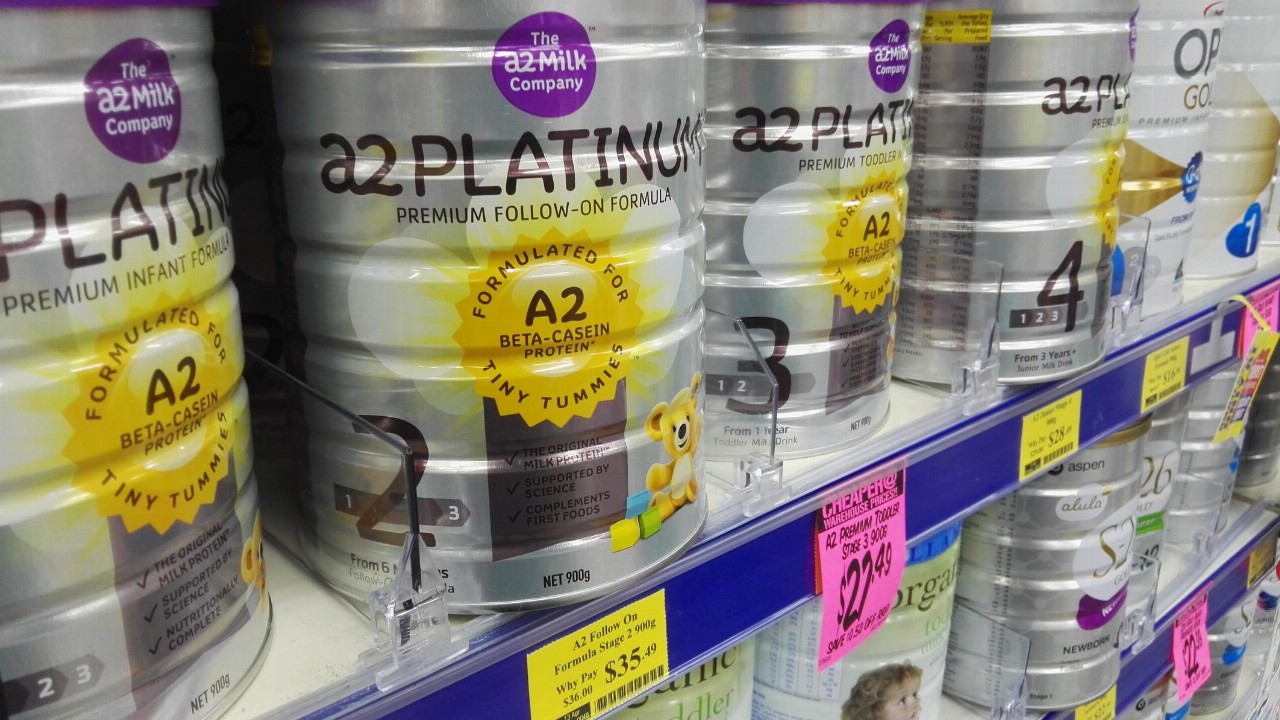
While the MAIF agreement has been extended, the ACCC flagged concerns that baby formula makers could be using toddler milk products as a proxy to market infant formula, undermining the effectiveness of the advertising ban.
Under the MAIF agreement, manufacturers are free to advertise toddler milk products. However, the ACCC said studies show that consumers could get confused between infant formula and toddler milk products in advertising given the similarities between the products.
This concern has also been raised by the WHO, which suggested in 2016 that breast milk substitutes covered by the MAIF code should include toddler milk products because promoting toddler milk products was effectively promoting baby formula.
“The ACCC has noted the rise in advertising for toddler milk products, and is aware of concerns that this may be used as a proxy to market infant formula,” Ms Rickard said.
“Our decision on whether to authorise this agreement was finely balanced as a result.”
She said the ACCC encouraged the Department of Health to consider these issues when it conducts a broad review of the MAIF agreement later this year.