
Join our daily newsletter At The Bell to receive exclusive market insights
- Despite border closures beginning to lift, Qantas (QAN) is still expecting an underlying earnings before interest and taxes loss (EBIT) of more than $1.1 billion
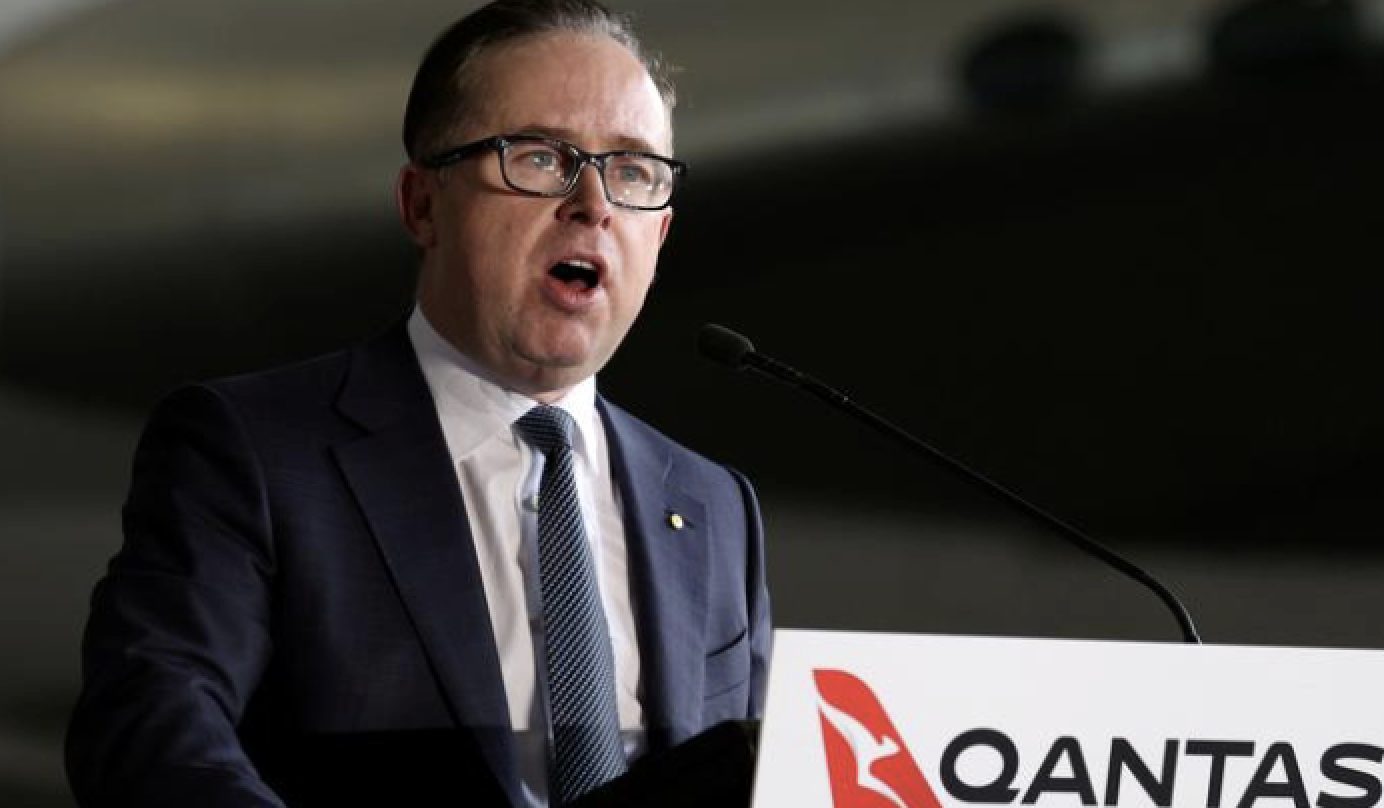
- The airline released a 1H FY22 trading update on Thursday, with CEO Alan Joyce labelling the past six months as “one of the worst halves” since COVID-19 began
- The business expects ramp-up costs to be incurred in 2H, with QAN predicting domestic travel will return to pre-COVID-19 levels by Q3 FY22
- International travel will remain subdued, with the ASX-200 lister estimating overseas flight will hit 60 per cent of pre-COVID-19 levels by June
- Qantas shares are down 1.23 per cent at $4.81 per share
Despite border closures beginning to lift across Australia, Qantas (QAN) is still expecting an underlying earnings before interest and taxes (EBIT) loss of more than $1.1 billion.
The airline released a 1H FY22 trading update on Thursday, with CEO Alan Joyce labelling the past six months as “one of the worst halves” since COVID-19 began.
The Delta outbreaks in Sydney, Melbourne and Canberra led to widespread lockdowns which impacted the travel industry’s recovery from the pandemic.
QAN explains the $1.1 billion loss includes non-cash depreciation and amortisation costs, while net debt should total $5.65 billion at the end of December.
Fuel costs should add up to $495 million for 1H FY22, and the ASX-200 lister expects additional ramp-up costs in the second half as flights increase.
The business said it would allow all stood-down Australian employees to return to to work in the coming year.
The airline is predicting domestic travel will return to pre-COVID-19 levels by Q3 FY22, however international flights will remain limited.
Qantas estimates overseas travel will return to 30 per cent pre-COVID-19 levels by March next year, before hitting 60 per cent pre-COVID-19 levels by June.
Company CEO Alan Joyce said it had been a challenging six months, but QAN had been bolstered by the $800 million sale of its Mascot assets.
“This has been one of the worst halves of the entire pandemic, where most states had their borders closed and the majority of Australians were in lockdown,” he said.
“Domestically, our capacity fell to around 30 per cent of pre-COVID-19 levels for several months.
“Fortunately, the structural changes we made earlier in the pandemic put us in a good position to weather these extremely poor trading conditions while the national vaccination rate reached a point where states started to open back up.”
Qantas shares were trading down 1.23 per cent at $4.81 per share at 12:07 pm AEDT.