

Join our daily newsletter At The Bell to receive exclusive market insights
- Australians are buying more substitute dairy and meat products according to recent data from the Australian Bureau of Statistics (ABS)
- The new data has seen a 14 per cent increase in dairy and meat substitutes in 2020 to 2021, following a 14 per cent increase between 2018 and 2019
- ABS health statistics spokesperson Paul Atyeo said the per person consumption of dairy and meat substitutes was 20 grams per day in 2020-21, which is up a total of 29 per cent
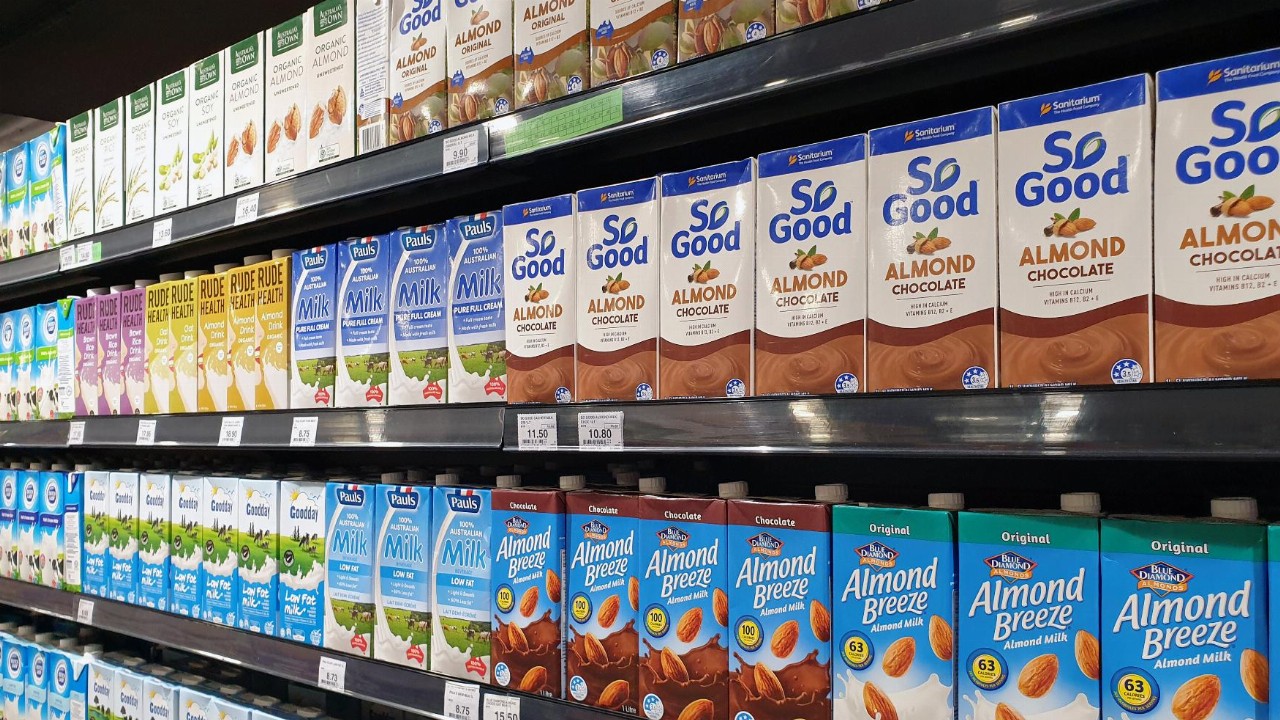
- Almond milk was the favourite which saw a huge increase in apparent consumption, up 31 per cent in the last two years
- Soy milk was another favourite which increased by 16 per cent over the same period, according the the ABS data.
Australians are increasingly buying more dairy and meat substitutes according to recent data from the Australian Bureau of Statistics (ABS).
The new data has seen a 14 per cent increase in dairy and meat substitutes in 2020 to 2021, this follows a 14 per cent increase between 2018 and 2019.
ABS health statistics spokesperson Paul Atyeo said the per person consumption of dairy and meat substitutes was 20 grams per day in 2020-21, which is up a total of 29 per cent from 15 grams per day in 2018-19.
“About 17 grams of apparent consumption per person per day came from dairy milk substitutes like soy milk or almond milk. This is equivalent to about half a metric cup per week,” Mr Atyeo said.
“Consumption of dairy milk substitutes rose four grams per day between 2018-19 and 2020-21 mirroring a four grams per day fall in dairy milk over the same two year period.”
Almond milk was the favourite which saw a huge increase in apparent consumption, up 31 per cent in the last two years.
Soy milk was another favourite which increased by 16 per cent over the same period, according the the ABS data.
Another product category which saw a significant was non-alcoholic beverages which rose seven per cent between 2018-19 and 2020-21.
The increase was driven by diet soft drinks, up 21 per cent, and packaged water, up eight per cent per person. In contrast, sugar-sweetened soft drinks have remained relatively flat, however, still make up most (61 per cent) of the soft drink volume.