

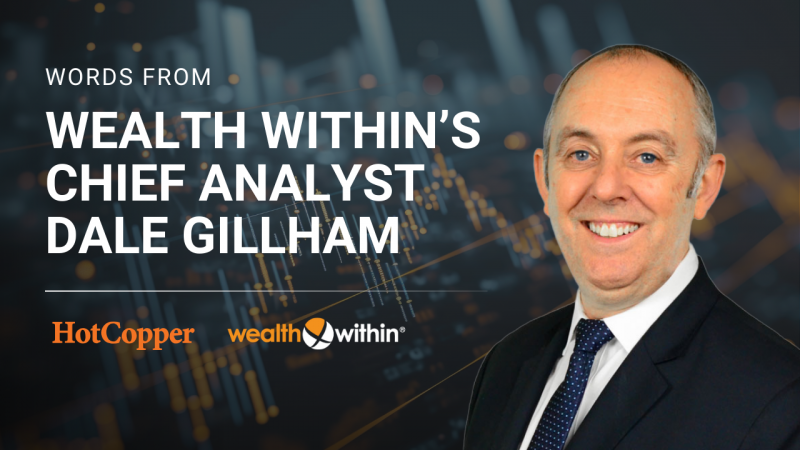
Next week, the Reserve Bank is expected to leave interest rates unchanged because inflation has eased and the labour market appears resilient. I think that’s a mistake. Not because inflation is about to surge again, but because the RBA is underestimating the biggest threat facing Australia’s economy over the next few years: artificial intelligence.
Listen to the HotCopper podcast for in-depth discussions and insights on all the biggest headlines from throughout the week. On Spotify, Apple, and more.
A recent Goldman Sachs report identified 35 major Australian companies where labour costs have grown much faster than sales, making them prime candidates for AI-driven cost-cutting. Banks, retailers, healthcare companies, technology firms and industrial businesses are all on the list, and many have already said AI will play a bigger role in improving productivity. However, these are only the companies we know about.
Across corporate Australia, businesses are no longer just asking who they should hire next; they’re asking whether they need to hire anyone at all. Which brings me to the most important point: are we walking into a recession because this is an efficiency story that is built around shareholder interests?
If this is correct, then it’s easy to understand that a company’s top priority is shareholder satisfaction, and there is no better way to keep shareholders happy than rising profit margins. AI allows businesses to grow revenue while employing fewer people, which is a different challenge for the labour market.
The RBA spent years telling Australians that inflation was above the 2–3 per cent target band and that it couldn’t be ignored. Yet, the Reserve Bank is expected to leave interest rates on hold again, largely because inflation has eased while unemployment remains within a range it believes is manageable. However, the reality is we are sitting at the upper band of what is acceptable, and my concern is where it could be in two years’ time.
If Australian companies adopt AI as aggressively as many are signalling this reporting season, unemployment could move above 5 per cent far quicker than traditional economic models anticipate. By the time the official data confirms that trend, thousands of jobs may already have disappeared.
The RBA has always argued that monetary policy needs to be forward-looking. If that’s true for inflation, it should also be true for employment because I don’t think the biggest risk over the next few years is another inflation shock; it will be a jobs shock.
Best and Worst Sectors
Information Technology was the best-performing sector this week, rising more than 7 per cent on the back of further falls in the oil price. Materials and Healthcare also performed strongly, gaining more than 6 per cent after attracting nifty buyers as both sectors are coming off double-digit pullbacks and are the hot picks for sectors that could shine during this earnings season
At the other end of the market, Energy was the weakest sector, falling over 2 per cent as weaker oil prices drove demand for oil and gas stocks lower. Utilities also slipped under half a per cent as the heavily weighted stocks in this sector continue to exude caution, with prices trading sideways over the last couple of weeks. Given the uncertainty around the interest rate decision, it’s no surprise the market seems to be weighing on this outcome to decide whether utilities are back in play.
Best and Worst Stocks
Genesis Minerals led the gains in the ASX Top 100 this week, climbing more than 17 per cent. This was followed by Vault Minerals up more than 16 per cent, and Greatland Resources, which gained over 15 per cent, with all three stocks benefiting from the strong overnight rise in the gold price, which appears to have now found a major bottom.
Woodside Energy was the weakest performer, followed by Ampol Limited, with both stocks falling more than 3 per cent on the back of the oil price wobbles. The Lottery Corporation lost over 2 per cent as the selloff continued, after sellers took control at the heavily defended $5.70 level and pushed the stock sharply lower.
All Ordinaries Index Update
The All Ordinaries Index has finally done it, breaking to a fresh all-time high after surging 3.4 per cent so far this week. After months of grinding sideways and repeatedly testing resistance, the market has decisively broken through, confirming that buyers are firmly back in control.
What makes this move even more encouraging is that it wasn’t driven by just one sector. Technology, Materials and Healthcare led the rally, while Financials also played an important role. When multiple sectors are pulling in the same direction, it usually points to a healthier and more sustainable bull market.
The timing couldn’t be better, with reporting season now underway. Markets are clearly looking ahead, particularly to stronger earnings from the Materials sector. However, this is still a stock picker’s market. Some companies will exceed expectations, while others won’t, making careful stock selection more important than ever.
The next key level to watch is 9,800, which now becomes the market’s next major resistance. More importantly, the stubborn 9,200 level that rejected the market time and time again has finally become support, and that on its own should be reason to celebrate.
Good luck and good trading.
Join the discussion: See what’s trending right now on Australia’s largest stock forum and be part of the conversations that move the markets.
Dale Gillham is the Chief Analyst at Wealth Within and the international bestselling author of How to Beat the Managed Funds by 20%. He is also the author of the award-winning book Accelerate Your Wealth—It’s Your Money, Your Choice, which is available in all good bookstores and online at www.wealthwithin.com.au.
Disclaimer: While Wealth Within holds an Australian Financial Services License (AFSL:226347), the information featured in this program is general in nature and therefore should not be relied upon. Before making any investment decisions, you should consult a licensed professional who can advise whether your investment decisions are appropriate for you.
The material provided in this article is for information only and should not be treated as investment advice. Viewers are encouraged to conduct their own research and consult with a certified financial advisor before making any investment decisions. For full disclaimer information, please click here.