
Join our daily newsletter At The Bell to receive exclusive market insights
- The Australian Competition & Consumer Commission (ACCC) will take no enforcement action on Qube’s (QUB) alleged breach of merger law in its completed acquisition of Newcastle Agri Terminal (NAT)
- However, the ACCC has not ruled out potential future action and said it remains concerned with potential impacts on the supply chain for bulk grain export through the Port of Newcastle
- Market feedback has thus suggested that the NAT does not overlap significantly with Qube’s Quattro Terminal at the Port of Kembla
- QUB shares were down 0.5 per cent, trading at $3
The Australian Competition & Consumer Commission (ACCC) decided it will take no enforcement action on Qube’s (QUB) alleged breach of merger law in its completed acquisition of Newcastle Agri Terminal (NAT).
However, the ACCC has not ruled out potential future action and said it remains concerned with potential impacts on the supply chain for bulk grain export through the Port of Newcastle.
The acquisition was completed on September 30, 2021 before the ACCC could properly consider and review the transaction.
The ACCC’s requests that Qube delay completing the transaction after competition concerns were raised, fell on deaf ears which led to the October 2021 investigation to see if the acquisition was in breach of merger law.
The commission also cited the lack of time and information to assess the competitive impact as a secondary reason for the investigation.
“While we have decided not to take court action at this time, it is extremely disappointing to see parties complete an acquisition such as this without allowing enough time for appropriate regulatory review,” ACCC Commissioner Stephen Ridgeway said.
“Under current market conditions, we do not consider Qube is likely to have an incentive to discriminate against rival rail haulage services accessing the NAT and the transaction is therefore unlikely to substantially lessen competition.
“GrainCorp also has a major terminal at the Port of Newcastle which limits Qube’s ability to use the NAT as a basis for engaging in anti-competitive bundling.
“Qube currently also has limited volumes and market share in both up-country storage and rail haulage, which reduce the likelihood that bundling would impede Qube’s competitors’ ability to compete in those markets.”
Qube is Australia’s largest provider of import and export logistics services including ports, bulk material handling, logistics and property services.
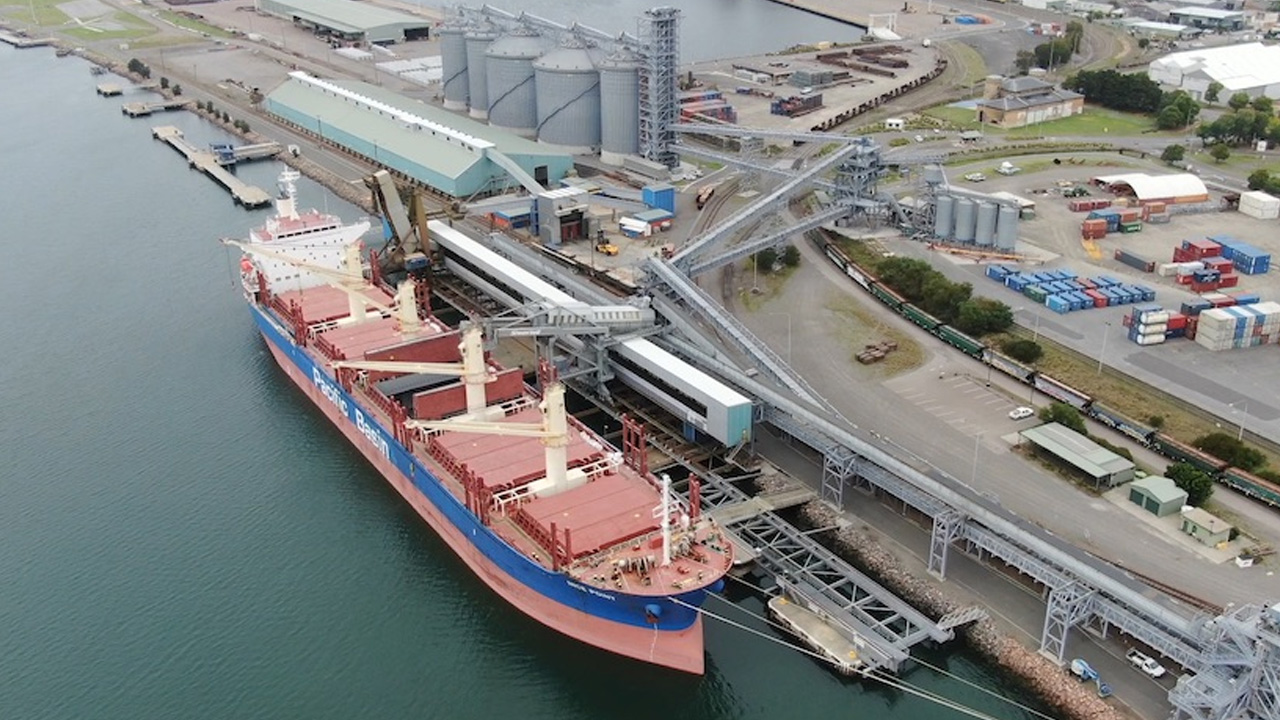
The NAT is one of two bulk grain terminals located at the Port of Newcastle. Qube also operates the Quattro Terminal, one of two bulk grain terminals located at the Port of Kembla.
Each terminal exists in a separate “draw zone”, which is determined by the relative distance and price of transporting grain from up-country sites to the port for export.
Market feedback has thus suggested that the NAT does not overlap significantly with Qube’ Quattro Terminal at the Kembla Port.
QUB shares were down 0.5 per cent, trading at $3 per share as of 1:40pm AEDT.