

Join our daily newsletter At The Bell to receive exclusive market insights
- Poland has vowed to keep its disputed Turow coal mine operating, despite being ordered to pay €500,000 (A$808,277) per day to the European Commission
- The court ordered the penalty on Monday for defying an earlier ruling to stop work
- Poland and the Czech Republic are involved in an ongoing dispute over the mine, which Prague argues is damaging communities
- Producing lignite — or brown coal — the mine has been operating for more than a century, but has recently expanded further towards the Czech border
- Prague is still looking to reach an amicable agreement, but some Polish officials have condemned the penalty
Poland has vowed to keep its disputed Turow coal mine operating, despite being ordered to pay €500,000 (A$808,277) per day to the European Commission for defying an earlier court ruling to stop work.
Europe’s top court, the Luxembourg-based Court of Justice of the European Union (CJEU), ordered the penalty on Monday.
It followed a request from the Czech Republic, which is embroiled in an ongoing dispute with Poland over the Turow open-pit mine, located next to their shared border outside the town of Bogatynia. The Czech government claims the mine, which is operated by state-owned enterprise Polish Energy Group, is damaging its communities.
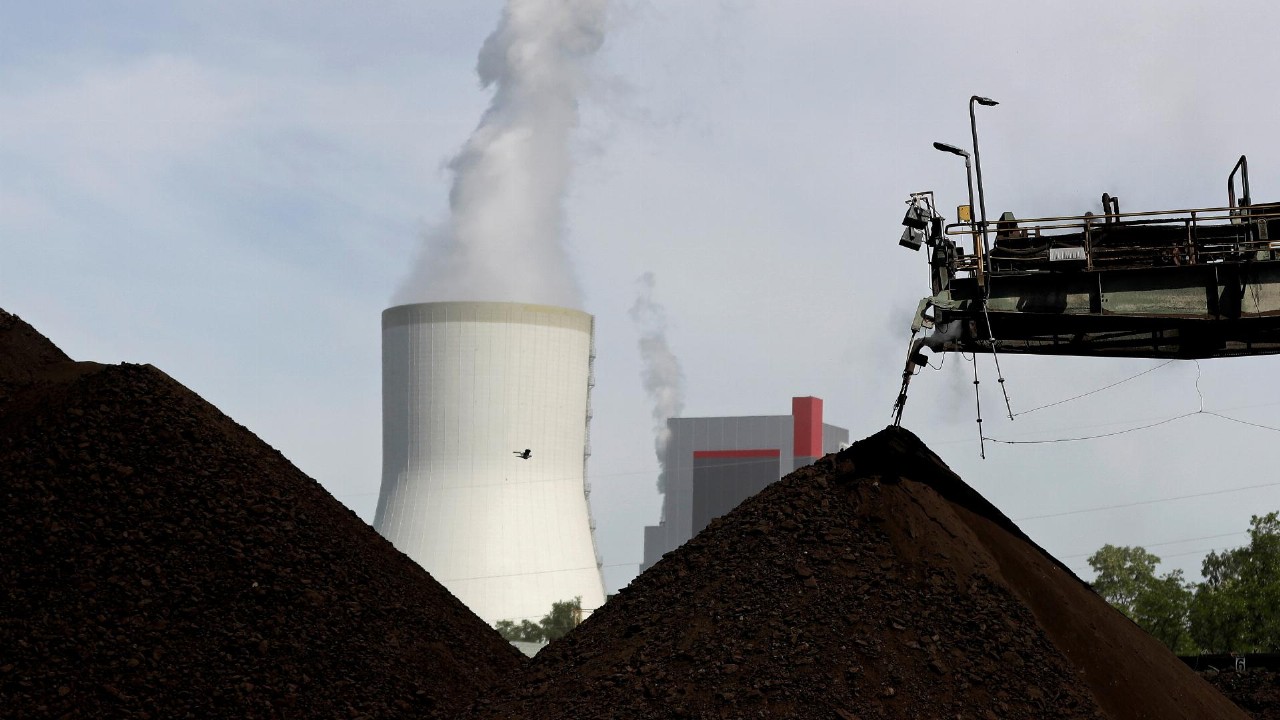
Producing lignite — or brown coal, which emits far more carbon dioxide than other varieties — the mine has been operating for more than a century, but has recently expanded further towards the Czech border.
The penalty order could pressure Warsaw to seek a resolution with Prague, after bilateral talks began in June over technical upgrades and measures to limit damage to underground water levels.
A firm deal is likely to end any legal disputes.
However, the Polish government said the EU court’s mandate undermined those talks, and said Turow — a major source of jobs and electricity in its region — would continue operations.
“The fine mentioned by the Court of Justice of the European Union is disproportionate to the situation and is not justified by facts,” Poland’s government said in a statement.
“It undermines the ongoing process of reaching an amicable settlement.”
When Warsaw rejected the suspension, Prague had originally asked for a daily penalty of €5 million (A$8.08 million) to be levied, but the court on Monday set the fine much lower.
“Such a measure appears necessary in order to strengthen the effectiveness of the interim measures decided upon in the order of 21 May 2021 and to deter that member state from delaying bringing its conduct into line with that order,” the judges said.
Prague welcomed the penalty but said it still wanted to reach an agreement amicably. Some Polish officials, however, strongly rejected the order.
“The CJEU demands half a million daily fines from Poland for the fact that Poland did not leave its citizens without energy and did not close the mines overnight,” deputy justice minister Marcin Romanowski said on Twitter.
“It is judicial robbery and theft in broad daylight. You won’t get a cent.”
Krzysztof Wozniak, a builder who has watched the mine advance steadily towards his house near Bogatynia, said coal mining was so enmeshed with the area’s past that “you very quickly become a public enemy around here if you talk against the mine.”
The coal mine — as well as the adjacent power plant, which is the fifth largest source of greenhouse gas emissions in Poland — do not employ more than a few thousand people, Wozniak added, but have “become a cult” that few dare challenge.
Several times over the past few years, Milan Starec, who lives in the Czech village of Uhelna just a few kilometres from the Turow mine, has turned on his tap to find no water.
The Czech Geological Survey reported in May that groundwater levels around Uhelna had dropped nearly eight metres since 2014, and could fall another 6.8 metres in the next six years if last year’s rate of decline continues.
“The water is a threat. It is something very frightening,” Starec said. “If the water is lost from the only source in the village, I don’t know what the solution is.”