
Join our daily newsletter At The Bell to receive exclusive market insights
- Roughly 28 per cent of gold exports from Brazil in 2019 and 2020 came from illegal mines, according to a new report
- Published by federal prosecutors and the Federal University of Minas Gerais, it found instances of illegality related to 48.9 tonnes of gold over the two-year period
- For 6.3 tonnes of gold produced, the region reported to authorities as the source of the metal showed no evidence of mining on satellite images
- Government data also showed that 111 tonnes of gold was exported in 2020, but only 92 tonnes were produced
- Illegal mining often leads to deforestation and has been found to poison rivers with mercury
According to a new report roughly 28 per cent of gold exports from Brazil in 2019 and 2020 came from illegal mines, suggesting widespread forging of documents and a lack of effective law enforcement.
Published by federal prosecutors and the Federal University of Minas Gerais, the report found instances of illegality related to 48.9 tonnes of gold over the two-year period.
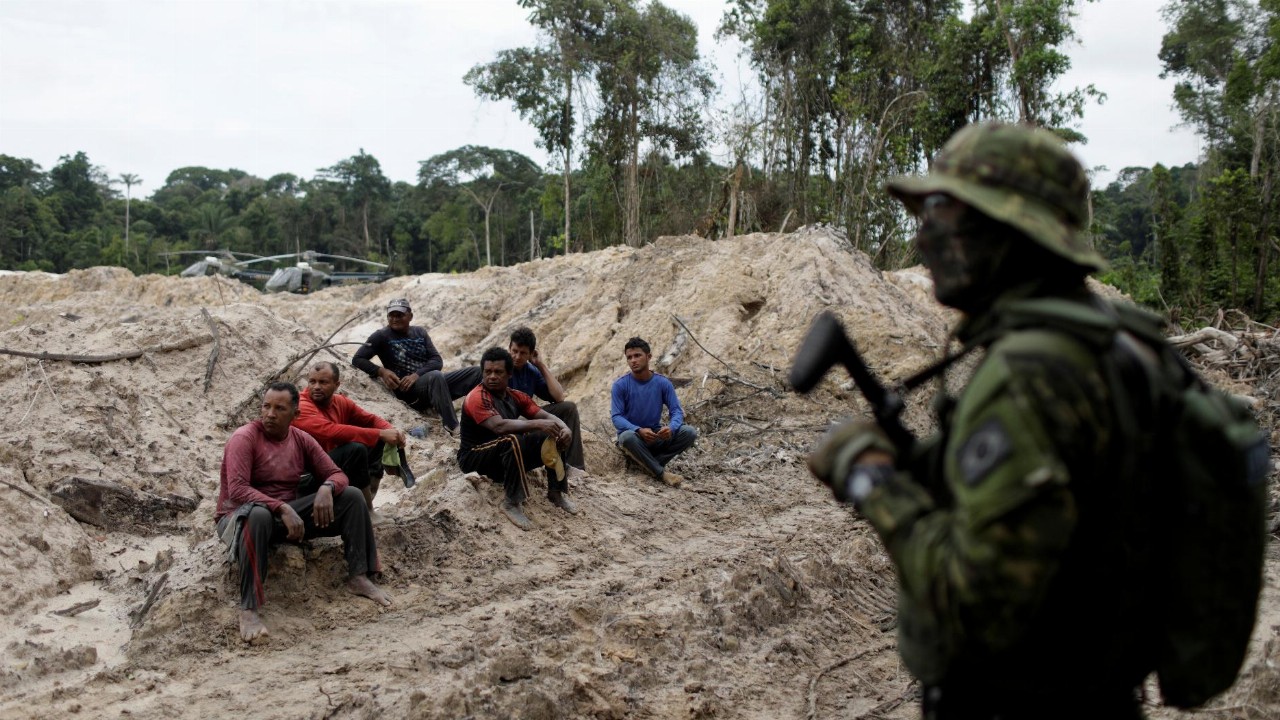
“Wildcat” miners in Brazil often extract gold from regions where no mining is allowed, such as protected nature reserves or indigenous land. Undertaken with no regard for environmental regulations, this activity often leads to deforestation in the Amazon rainforest and has been found to poison rivers with mercury.
However the report only considered only the gold that had been registered with the federal government in order to pay taxes on the commodity. That information was then cross referenced with satellite images of the reported locations of the mines, which found that reported gold production far exceeded the capacity of the mines.
“There was an attempt to launder this gold, to hide its real origin,” said Raoni Rajao, an environmental management professor at the Federal University of Minas Gerais and an author of the report.
“But by cross referencing it with images, there is no way this gold came from the declared origin.”
For 6.3 tonnes of gold produced, the region reported to authorities as the source of the metal showed no evidence of mining on satellite images. The remainder was reported to have come from places bordering protected areas that show signs of having been invaded by miners.
Government data also showed that 111 tonnes of gold was exported in 2020, but only 92 tonnes were produced, further indicating that some of the overall volume may have come from illegal sources.
In 2019 and 2020, Canada, Switzerland and Great Britain bought 72 per cent of Brazil’s gold exports.