

By Matt Oliver
As liquidity drives price action, resilient miners continue producing through the noise
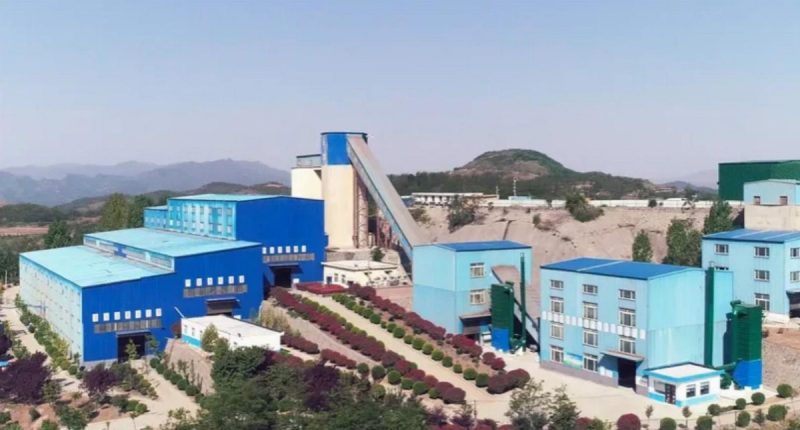
At a mining site, a haul truck carries tonnes of ore out of the ground.
It doesn’t know the price of silver.
It doesn’t care about inflation prints, bond yields, or geopolitical headlines.
Its job is simple: move material from point A to point B.
Whether silver is at $30 or $100, the process continues.
The mine is designed around geology and cost, not sentiment.
But above ground, in financial markets, everything reacts instantly.
Prices move. Positions unwind. Narratives shift.
And suddenly, a falling price is interpreted as a failing asset.
But the truck is still moving.
The ore is still there.
The system hasn’t changed.
Only the perception has.
Markets behave the same way.
When pressure hits, prices don’t simply move. They expose what is liquid, what is leveraged, and what can survive forced selling.
Silver right now is that system under pressure.
It didn’t fail. It revealed the stress around it.
The Move Everyone Thinks They Understand
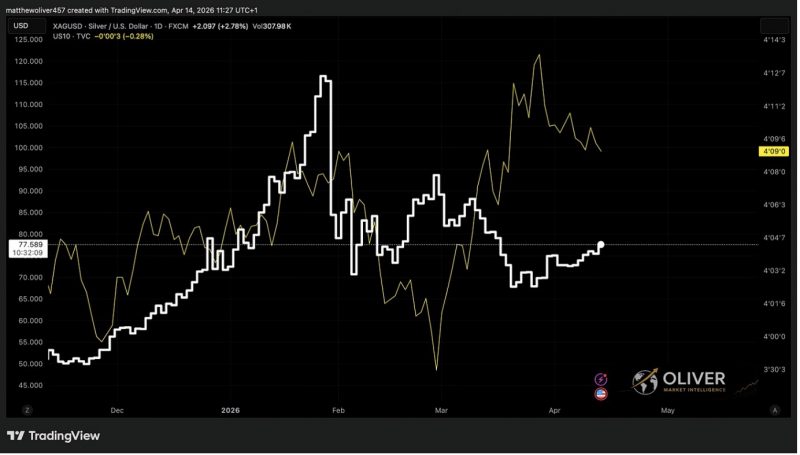
Silver has fallen sharply from its peak. A move like that, especially during geopolitical stress, looks like a breakdown.
The narrative feels straightforward. War risk rises. Oil spikes. Inflation expectations shift. The dollar strengthens. Risk assets sell off.
Silver gets pulled into that move.
On the surface, it looks like demand has weakened or that the rally went too far.
That is the story being told.
But it is not the correct one.

What Is Actually Happening Beneath the Surface
This is not a demand problem. It is a liquidity event.
When stress enters the system, capital does not move calmly. It moves fast and often indiscriminately. Institutions are not asking what they want to sell. They are asking what they can sell.
Silver sits directly in that category.
It is liquid. Widely held. Often part of leveraged positions.
So, when margin requirements rise and volatility spikes, silver becomes a source of cash.
Positions are unwound. Exposure is reduced. Not because the long-term outlook has changed, but because liquidity is required immediately.
This is how modern markets function.
A Pattern That Repeats
This sequence is not new.
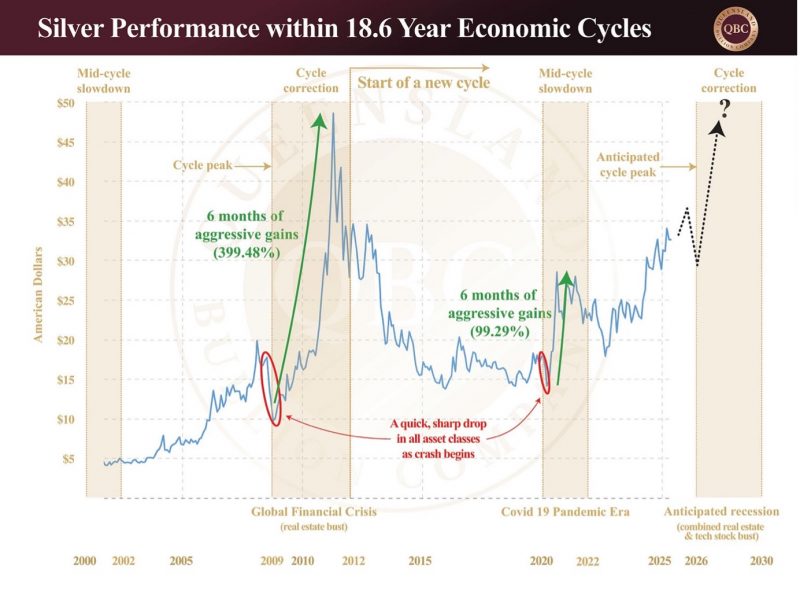
In 2008, precious metals sold off alongside equities before recovering.
In March 2020, gold and silver both dropped sharply as markets scrambled for liquidity, then reversed and surged.
What looks like a breakdown is often just the middle phase of a larger cycle.
The difference now is what sits underneath that cycle.
Source: Queensland Bullion Company
The Structural Shift Beneath the Price
While price action in Western markets is being driven by liquidity, the real story is happening elsewhere.
Silver is no longer just a monetary metal.
It is embedded in the industrial system.
The centre of that system is Asia (particularly China) which produces the majority of the world’s solar panels, one of the largest end uses of silver.
This is not cyclical demand. It is structural.
Solar continues to scale. Electric vehicles expand. Electronics remain dependent on silver’s conductive properties.
At the same time, supply is becoming less flexible.
Much of global silver production is a byproduct of mining other metals. That limits how quickly supply can respond to price.
And increasingly, supply is not just geological.
It is political.
Export pathways are tightening. Resource control is becoming strategic.
So, while price has moved lower, the underlying system is doing something very different:
Demand is embedded.
Supply is constrained.
Control is tightening.
Where the Market Misreads It
This is where the disconnect forms.
Short-term price is driven by liquidity.
Long-term value is driven by structural demand and constrained supply.
Markets tend to misprice that gap.
The focus remains on recent price action, while the more important question is who is buying during that weakness, and why.
The Operators Beneath the Surface
Mining companies sit at the edge of this dynamic.
They are leveraged to price in the short term, but anchored to physical assets in the long term.
When liquidity exits, they can fall alongside everything else.
But their underlying reality does not change nearly as quickly.
Take Silvercorp (SVM) as an example.
Across multiple cycles, the company has built a system designed to operate through volatility, not depend on it.
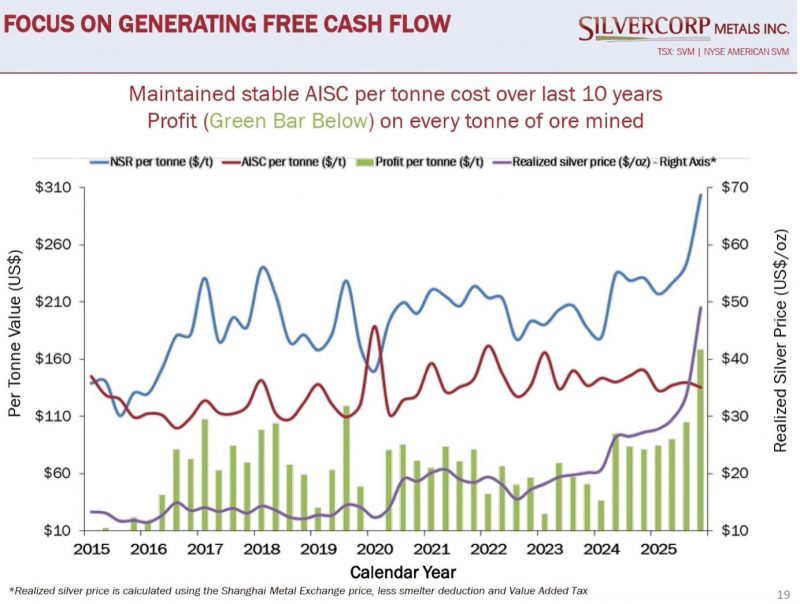
It has produced over 100 million ounces of silver since 2006, generating more than $600 million in profits and over $235 million returned to shareholders. Not just survival, but disciplined capital allocation through the cycle.
Costs matter more than narratives in this business.
More importantly, it operates with all-in sustaining costs below $14 per ounce, allowing it to remain profitable even during weaker price environments .
And that durability is translating right now. In its latest quarter (fiscal Q4 2026 / calendar Q1 2026), Silvercorp delivered record revenue of $147.4 million ( +96% year-on-year) not just riding the move in silver, but amplifying it.
Production isn’t standing still either: 6.8 million ounces over the past year, with organic growth ahead. No reliance on a higher price to justify the story, just steady expansion. Full financial results land May 25.
This is what resilience looks like.
Not predicting price.
But surviving it.
Positioned Inside the System
Positioning matters as much as cost.
Silvercorp’s core operations sit inside China’s manufacturing ecosystem—close to smelters, suppliers, and end demand.
That proximity matters in a world where silver demand is increasingly tied to industrial output and energy infrastructure.
This is not just about mining metal.
It is about being embedded in the system that consumes it.
At the same time, the company is expanding beyond a single geography.
Projects across Ecuador and Central Asia introduce exposure to copper and gold, metals aligned with the same electrification and infrastructure trends.
That diversification does not dilute the silver thesis.
It strengthens it.

What the Market Is Missing
During liquidity events, everything gets priced as if it is equally fragile.
But it isn’t.
Some assets are structurally weak.
Others are simply liquid enough to be sold.
Silver falls into the second category.
It is not being rejected.
It is being used.
And companies that can continue producing through volatility—while demand quietly builds—sit in a very different position than price suggests.

When the System Stabilises
Eventually, liquidity pressure fades.
Forced sellers disappear.
Markets begin to differentiate again.
And when that happens, the focus shifts back to fundamentals:
Where is demand going?
Who controls supply?
Which assets can operate through cycles?
Because the truck never stopped moving.
The system never stopped working.
And when the market catches up to that reality, the question is no longer why silver fell.
It is why it was ever priced as if the underlying system had changed at all.
Join the discussion. See what’s trending right now on Australia’s largest stock forum and be part of the conversation.
The material provided in this article is for information only and should not be treated as investment advice. Viewers are encouraged to conduct their own research and consult with a certified financial advisor before making any investment decisions. For full disclaimer information, please click here.