

Join our daily newsletter At The Bell to receive exclusive market insights
- For the first time since 2001, there are no American troops in Afghanistan now that the United States has completed its chaotic exit from Kabul
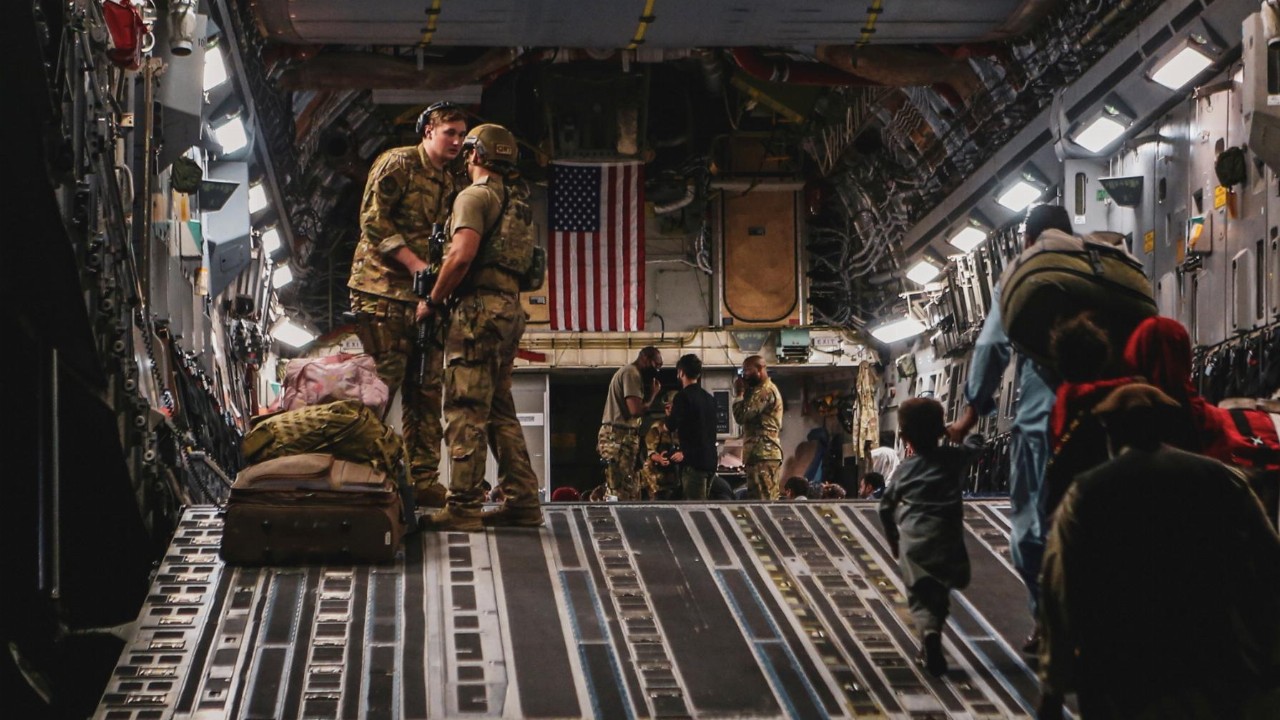
- More than 114,000 people have been airlifted from Kabul’s Hamid Karzai International Airport since August 14, including over 5500 US citizens
- However, tens of thousands of at-risk Afghans — including interpreters and journalists — have been left behind
- The Taliban is currently in discussion with a number of governments, like Qatar and Turkey, regarding the continuation of civilian flights
- According to the United Nations, more than 18 million people — over half of Afghanistan’s population — require aid
For the first time since 2001, there are no American troops in Afghanistan now that the United States has completed its chaotic exit from the war-torn country.
More than 114,000 people have been airlifted from Kabul’s Hamid Karzai International Airport since August 14, including over 5500 US citizens.
A small number of Americans have chosen to stay in Afghanistan, and US President Joe Biden’s administration said it expects the Taliban to continue allowing safe passage for those and other that might want to leave.
Tens of thousands of at-risk Afghans, including interpreters who worked with the US military, journalists and women’s rights activists, have also been left behind. While it’s not yet known what their fate will be, there are concerns that the Taliban may retaliate against them.
How exactly those people will escape also remains unclear, given Kabul’s airport is now effectively uncontrolled and US aircraft have been banned from Afghanistan’s airspace without prior authorisation.
The Taliban is currently in discussion with a number of governments, including Qatar and Turkey, regarding the continuation of civilian flights. But Turkish Foreign Minister Mevlut Cavusoglu said on Sunday that repairs need to be made at Kabul airport before it can be reopened.
Turkey has been responsible for security at the airport for the last six years. Keeping the facility open after foreign forces hand over control is critical not just for Afghanistan to stay connected to the world, but also to maintain aid supplies and operations.
According to the United Nations, more than 18 million people — over half of Afghanistan’s population — require aid, and half of all children under the age of five already suffer from acute malnutrition.
Another major concern is the threat posed my Islamic State, which claimed responsibility for at least two suicide bombings last week that killed 13 US troops and dozens of others.
Named after an old term for the region, Islamic State Khorasan (ISIS-K) first appeared in eastern Afghanistan in 2014 and quickly established a reputation for extreme brutality. Some experts say it was founded by hardline figures of the Pakistani Taliban, who fled into Afghanistan when Pakistan’s security forces launched a crackdown on militant groups.
ISIS-K has fought both the Western-backed Afghan government and the Taliban, but its precise connection with the primary Islamic State movement in Iraq and Syria remains uncertain.