

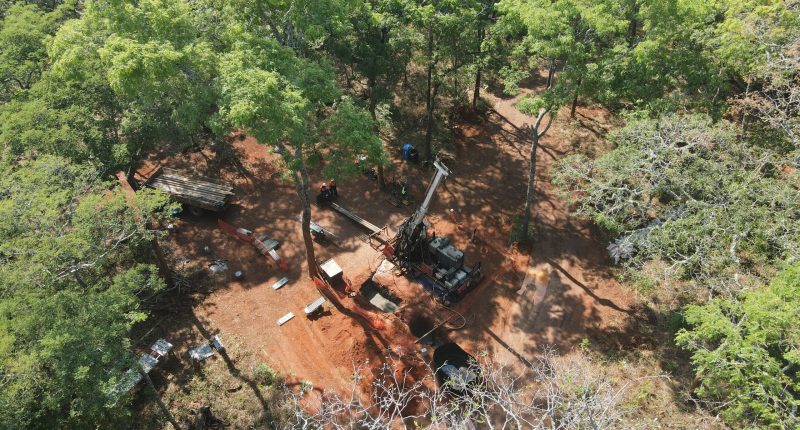
ASX-listed Prospect Resources’ (ASX: PSC) Mumbezhi Project is a promising copper opportunity, with gold and cobalt by-products, in Zambia’s North-Western Province, and one worth keeping an eye on.
And that goes beyond the obvious exposure to what could be a significant copper producing operation in an established mining and refining jurisdiction.
“Both cobalt and gold have appreciable by-product value to Mumbezhi,” Prospect Resources’ (ASX: PSC) Corporate Development Manager David Broomfield told HotCopper.
“Working out their actual recoveries and at what grades is underway. In short, there are copper smelters in the Zambian Copperbelt that will pay [Prospect Resources] … for the copper concentrates (including the by-products) that are produced.”
But that the project is a triple-commodity opportunity doesn’t speak to the true nature of potential on-site.
There are two big other factors to consider – first, the location of the project atop the geological feature that is the Central African Copperbelt, and secondly, that Zambia is a major copper producer with well-established downstream copper smelting and refining infrastructure.
The country of Zambia holds some 6% of global copper reserves and is the largest copper producing nation in Africa. This article will first examine the value proposition of Prospect’s Mumbezhi Project before diving further into the regional underlying geology itself, then turning to jurisdictional considerations regarding Zambia’s copper export capacity.
An overview of the Mumbezhi Project
Located 25km southeast of Canadian First Quantum Minerals’ Zambia-based Sentinel copper mine, Prospect Resources’ Mumbezhi Copper Project is in Kalumbila District, North-Western Province, home to Zambia’s largest copper mines, including Kansanshi, Sentinel and Lumwana.

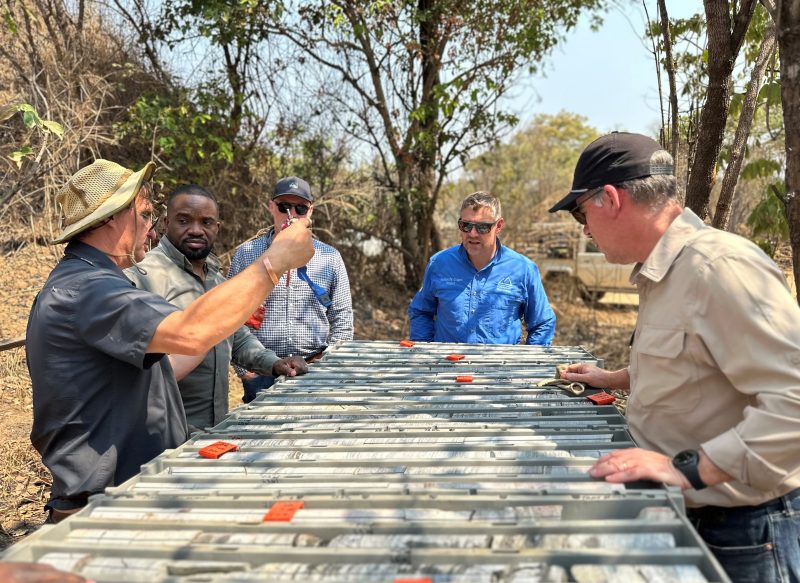
Held 90% by the Company and with a 10% stake still retained by the private Zambian-based mineral development rights company the project was acquired from; Mumbezhi’s boundary envelope reflects a project covering 356sq.km covering two, 25-year of renewable tenure, large-scale mining licences.
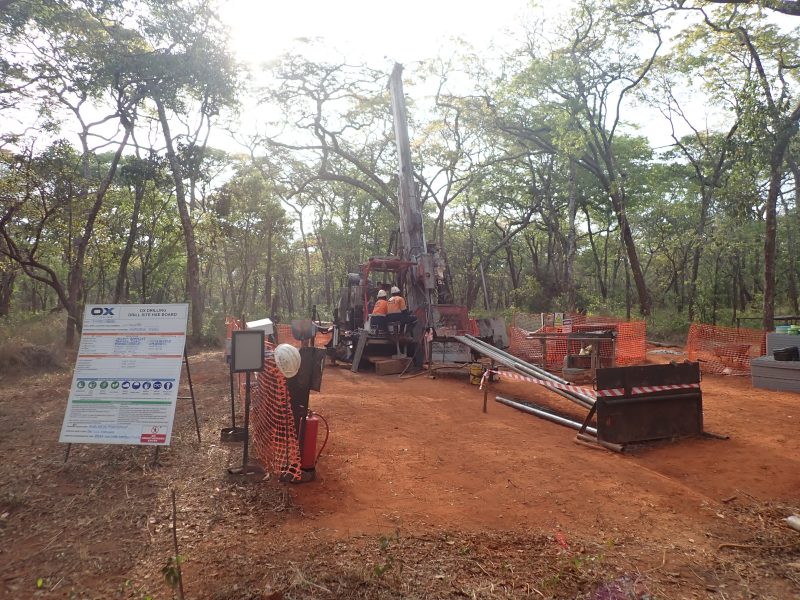
Drilling has been Prospect’s main focus on-site since acquisition in May 2024, with Phase 3 programme kicking off in May of this year using four diamond rigs. The drilling commenced just as the company updated its Indicated and Inferred Mineral Resource Estimate (MRE) to 208.1 million tonnes at 0.42% copper, containing some 877,000 tonnes of copper and 262,100 ounces of gold.
On the back of that update, 40% of the JORC MRE now sits in the higher-confidence Indicated classification, the category that can be converted to Ore Reserves in later studies. Phase 3 infill drilling aims to increase that proportion further.
But what actually makes a copper discovery attractive, and how should investors interpret the results as they come through? Prospect Resources’ Corporate Development Manager, David Broomfield, offers his perspective in the video below.
While the size of a mineral resource is important, grade alone doesn’t tell the full story when assessing a copper project’s potential.
Prospect Resources’ Corporate Development Manager, David Broomfield, explains the importance of mineralisation width, depth and continuity, and why these factors matter when interpreting drilling results from Mumbezhi.
Phase 3 drilling is ongoing and the company is expecting to publish an initial Scoping Study in Q1 2027, alongside an updated MRE. PSC’s on-going regional exploration work across its Mumbezhi holdings is multi-faceted, and continues to indicate the potential for further large deposits.
This work has included termite hill geochemistry and Induced Polarisation geophysical surveys this year, which followed up, licence-wide regional soil geochemistry and airborne electro-magnetics in 2025. Mineralised zones defined by these techniques have been further tested by surface aircore drilling, as a prelude to diamond drilling.
The prospective upside value for investors on the back of this high-class location can’t be understated.
Additional to Sentinel, several other major producing open pit and underground copper mines are located relatively nearby and those projects are defined by long-life copper project economics afforded by the highly prospective Central African Copperbelt geology. Beyond Sentinel, the region hosts some of Zambia’s largest long-life open-pit copper mines, including Kansanshi and Lumwana.
How did the Central African Copperbelt form?
With contemporary research placing its host rocks in the Neoproterozoic era (roughly 1,000 to 540 million years ago), the Central African Copperbelt (CAC) is known for its ‘large to super-large’ copper-cobalt deposits.
Additionally, the Central African Copperbelt, which hosts Prospect Resources’ Mumbezhi Copper Project, is the world’s largest sediment-hosted copper province.
“The African Copperbelt was originally a sedimentary basin in which copper was first deposited at very low grades, where those metal-bearing fluids met oxygen-poor (reduced) layers in the sediments,” Broomfield told HotCopper.
“At least two periods of major folding upgraded the copper into ore deposits particularly at folded hinges in soft flexible rocks … that’s what we [Prospect Resources] have at Mumbezhi, and the flagship Nyungu Central resource in particular.”
Spanning the borders of multiple African countries, the CAC has been extensively studied across academic geological history and highlighted by the US Geological Survey (USGS) as the world’s largest and highest-grade sediment-hosted copper province.

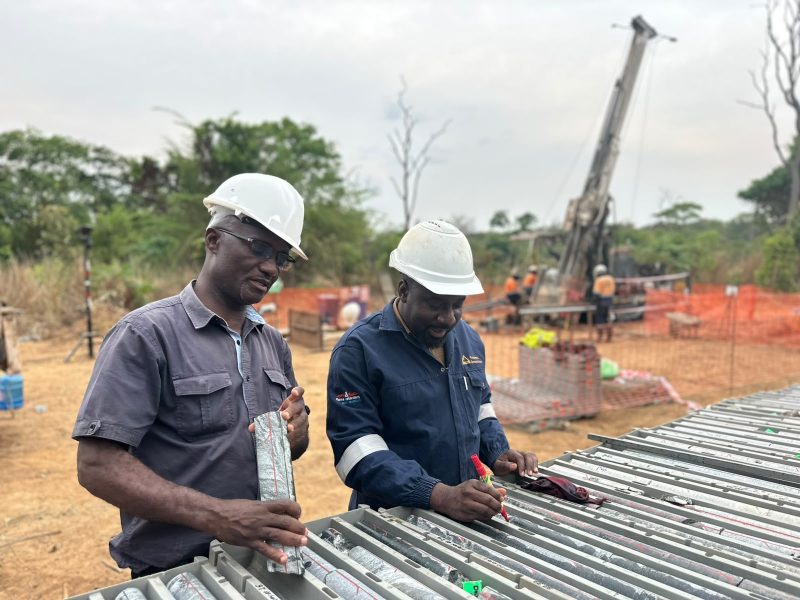
Like many sediment-hosted copper deposits across the planet, the CAC was formed in large part when the ancient continent of Rodinia split up into separate landmasses, creating the geological conditions that directly precipitated the formation of the Copperbelt.
When the landmass separated, copper-bearing brines circulating through the rift-basin sediments were channelled along faults into favourable rock layers, ultimately setting the stage for what would become mineable copper deposits hundreds of millions of years later.
(This same geological process was behind Western Australia’s Nifty copper deposit, when it comes to the origins of a sediment-hosted mineralisation body.)
North-Western Zambia is a major copper producing region
That the CAC spreads into northwestern Zambia, around Solwezi and Kalumbila, is where the value proposition of Prospect Resources being within the CAC mineral envelope starts to manifest.
Zambia as a nation, is a major global producer of copper due to the coincident location of the CAC; commercial copper mining has been established in the country since the 1920’s according to the British Geological Survey (BGS) and the country is home to a wide network of open-pit and underground mines.
Additionally, Zambia is home to major smelting and copper refining infrastructure across the country.
Assuming all dozen of Zambia’s major downstream refining facilities are operating at nameplate capacity, Zambia’s refining capacity sits at 1.2Mtpa. That is more than the country’s 2025 mine output, leaving room for new concentrate supply. The Zambian government’s Ministry of Mines (MoM) in 2024 introduced a national strategy to produce up to 3Mtpa by 2031.
Zambia has a total of ‘ten to fifteen’ major producing copper mines in the country, per a recent jurisdictional Canadian Mining Report. North-Western Province – where Prospect Resources’ Mumbezhi project is located – is now the country’s largest copper-producing region.
In 2025, Zambia produced 890,350 tonnes of copper; an increase of 8% over 2024 driven by this newly restarted mine output, whilst copper – a key metal for electrification and data centres – hit record prices, in what many analysts describe as a ‘megatrend.’
With Prospect Resources (ASX: PSC) holding a copper-gold-cobalt resource in an established mining jurisdiction with downstream smelting capacity, and a Scoping Study due in Q1 2027, it’s clear why HotCopper investors are closely watching the project.
Phase 3 drilling is set to continue until the camp closes for the wet-season break in mid-December, with assays from 25 holes still to come.
Join the discussion: See what’s trending right now on HotCopper, Australia’s largest stock forum, and be part of the conversations that move the markets.
The material provided in this article is for information only and should not be treated as investment advice. Viewers are encouraged to conduct their own research and consult with a certified financial advisor before making any investment decisions. For full disclaimer information, please click here.
Disclaimer: This article was crafted and published by way of a commercial relationship with Prospect Resources and representatives from the company were instrumental in editing parts of the above content.