

Join our daily newsletter At The Bell to receive exclusive market insights
The transition towards a decarbonised, high-tech economy across the globe has moved beyond conceptual, right into a physical construction phase – and at the heart is copper. As supply chains tighten and the “AI revolution” just keeps building demand for power-intensive infrastructure, everything pales behind jurisdictions actually able to bridge the looming supply-demand gap.
Listen to the HotCopper podcast for in-depth discussions and insights on all the biggest headlines from throughout the week. On Spotify, Apple, and more.
Disclaimer: This article is disseminated in partnership with Prospect Ltd. It is intended to inform investors and should not be taken as financial advice.
For Australian-listed Prospect Resources (ASX:PSC), the strategy’s not merely about holding assets in the right commodity, but holding them in the right place, and with the right people at the helm. By sowing itself right into the fabric of Zambia’s mining sector, Prospect is positioning itself to capitalise on a tier-one copper jurisdiction currently undergoing a massive structural modernisation.
A structural squeeze
Where once the “electrification of everything” was just a snappy marketing slogan, it’s now become fundamental to commodity markets everywhere. That stands most true for copper, where it’s very quickly becoming an essential conduit for renewable energy systems, electric vehicle (EV) fleets, and the massive grid expansions all required to support the artificial intelligence revolution and data centre growth.
Global supply is struggling to keep up, though. Mature mines in traditional provinces are struggling with declining grades – and in some cases, social unrest – while fresh discoveries are becoming as rare as the valuable metals they hold.
This modern status quo has placed a premium on emerging copper provinces that can offer both geological scale and a stable regulatory environment.
Under that cloud, Africa (and specifically the Central African Copperbelt), is slowly but surely regaining its standing as a critical pillar of long-term global supply. Within this belt, Zambia stands out as a primary destination for mining capital seeking high-grade potential backed by institutional reform.
A tier-one copper jurisdiction reborn
Copper is the undisputed backbone of the Zambian economy, accounting for the vast majority of its exports and a significant portion of its GDP and fiscal revenue, according to the PwC Zambia Mining Report released in CY25. Under current development strategies, the government has set an ambitious target to lift copper production to three million tonnes per annum by CY31, at the latest.
The results are already visible. Zambia saw double-digit YOY production growth in CY24, supported by investments in infrastructure and power reliability, including the integration of renewable energy sources to support heavy industry.
In CY21, Zambia’s copper output was around 880,800 metric tonnes (compared to northern neighbour DRC’s 1.88M). That was up to 890,346 by CY25.
To further de-risk the sector as it rekindles, the Zambian government has also recently commissioned a national high-resolution geophysical survey. This aims to modernise the African country’s geological data, providing explorers with the precision to identify the next generation of tier-one deposits.
The presence of global majors like First Quantum and Barrick, both of whom continue to invest billions into expanding their Zambian footprints and associated infrastructure, only further validates the jurisdiction’s scale and long-term credibility.
The Prospect edge: “Boots on the ground”
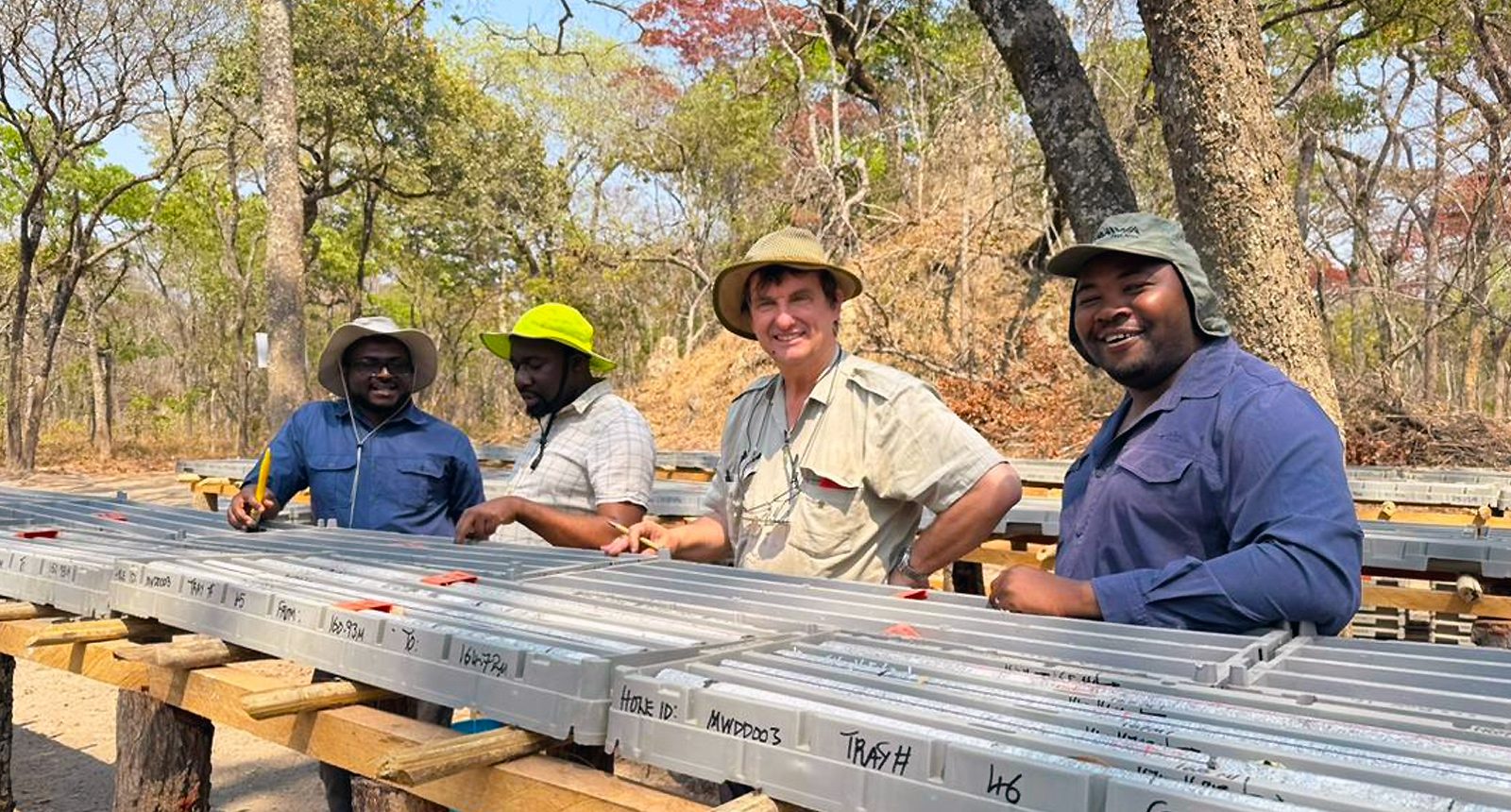
While many ASX juniors manage African assets remotely from corporate suites in Perth or Sydney, Prospect Resources has opted for a “boots-on-the-ground” model. This physical presence at the Mumbezhi Copper Project within the world-class Mwombezhi Dome represents a distinct competitive advantage.
Operations are led in-country by Mwelwa Manda, a country manager with deep local expertise. Speaking in a recent interview with HotCopper, Manda emphasised that operating in Zambia requires more than just capital; it requires an active, physical engagement with regulators, local communities, and stakeholders.
“Operating in Zambia as a local, for a company that has a presence on the ground, makes it much easier to navigate the regulatory environment and build the necessary trust with communities,” Manda noted.
“Local knowledge and community engagement are very important, and we tend to involve local contractors and companies in what we do.”
He also explained that physical presence significantly reduces jurisdictional risk; the team can address operational challenges in real-time rather than relying on intermittent site visits.
And then there’s local stability: “Zambia is, from a regulation [and] political standpoint, very stable,” Mr Manda said. “We have consistent messaging, consistent attraction to investors. Even just recently, in our President’s latest keynote address to the mining industry, he spoke about issues on economic structure, attraction to capital, technology, and value additions, and I think companies like Prospect in Zambia – as well as other companies – play the role in that wider national messaging.”
Mumbezhi: Not just a “paper project”
Mumbezhi is not a “paper project,” Prospect has declared. It’s a tangible exploration and development play situated in a region known for hosting large-scale copper-cobalt-gold deposits. Helping that is that Prospect is well-funded, with a highly skilled technical team focused on fast-tracking asset developments.
The project benefits from being in a region where mining is prioritised. By having its leadership team living and working within the same time zone and culture as its project, PSC ensures that exploration programmes are executed with a level of precision and local buy-in that remote-managed peers often struggle to achieve.
It’s already paying off, too, with Prospect recently upgrading its resource estimate at Mumbezhi, with an increase in tonnage to 173.8Mt at an average grade of 0.44% copper for the Nyungu Central and Kabikupa deposits.
“That’s translated to a 63% growth in resource… we’re happy,” Mr Mwanda said. “This is the completion of our second upgrade owning the project, and we’re in the process of planning a phase three for drilling, too.”
Prospect’s home ground advantage
The thematic for copper is clear: New supply is scarce, demand is rising, and the jurisdictions that can deliver scale are few. Zambia is very quickly (and successfully) reforming its mining sector to meet this moment, and Prospect has already positioned itself as a primary beneficiary of this renaissance.
By combining a high-potential at Mumbezhi with authentic, on-the-ground development operations, PSC offers a differentiated path to copper growth – one built on local expertise, proven jurisdiction, and a physical commitment to execution.
Join the discussion. See what HotCopper users are saying about Prospect Resources Ltd and be part of the conversations that move the markets.
The material provided in this article is for information only and should not be treated as investment advice. Viewers are encouraged to conduct their own research and consult with a certified financial advisor before making any investment decisions. For full disclaimer information, please click here.