


Join our daily newsletter At The Bell to receive exclusive market insights
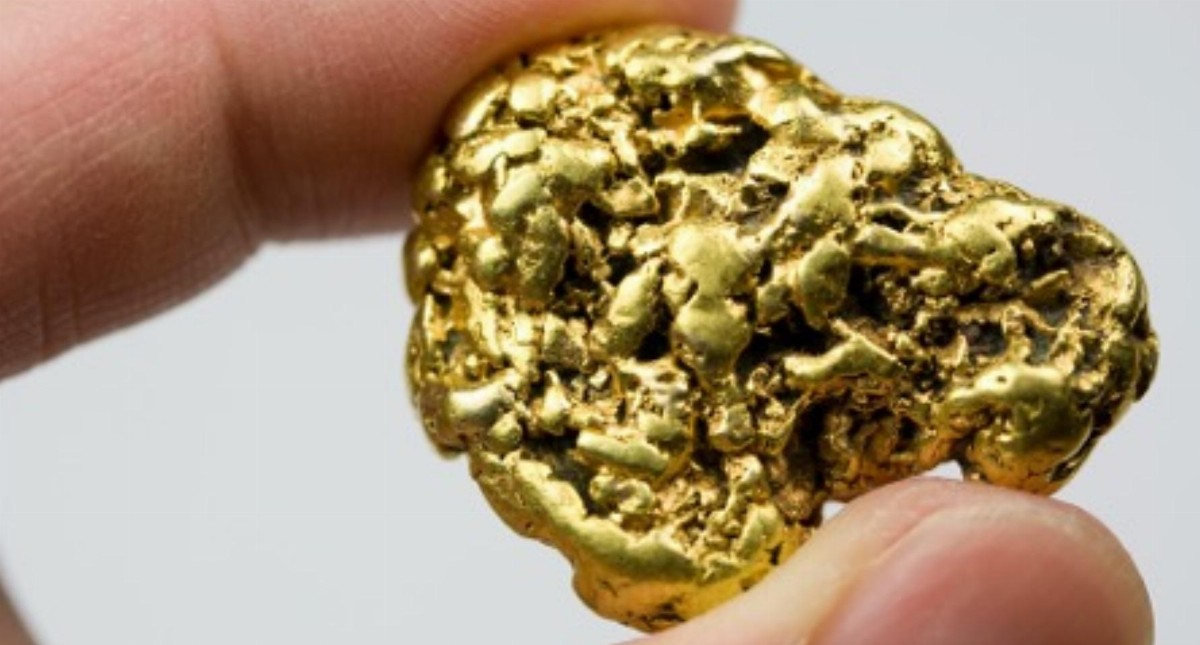
Gold has been on a rollercoaster ride recently, and confusing financial and political information streaming out of the U.S. is not helping matters. However, leading industry, government and investment groups are still confident that the bull run that dominated CY25 is nowhere near the finish line.
Listen to the HotCopper podcast for in-depth discussions and insights on all the biggest headlines from throughout the week. On Spotify, Apple, and more.
Swedish investment firm AuAug funds says the next major milestone is US$10,000 per troy ounce. During 2025, gold broke through both US$3,000 and US$4,000 per troy ounce. Several major banks are already forecasting that gold will surpass US$5,000 in 2026, AuAug noted.
“It would only take a few more strong years for us to reach the major milestone of US$10,000,” the Swedish fund noted.
The fund explained: “Gold continues to reflect the enormous expansion of fiat currencies driven by rising global debt and central banks running their printing presses at full speed. As we approach US$10,000, we will reassess and set a new long-term target based on the global conditions at that time.”
In its report, AuAug’s forecast for CY26 is another strong year, with prices rising quite decisively. “Our target for 2026 is US$6,000 (+39%), although anything above US$5,500 (+27%) would still constitute a very strong year.”
Leading global investment banking business Goldman Sachs may not be as bullish as AuAg; however, it still sees price upside despite the recent selling.
“So, we’re still bullish on gold. We’re expecting gold to go to US$5,400 by the end of 2026. But we do see significant upside to that forecast,” Lina Thomas, a senior commodities analyst with Goldman Sachs, recently stated.
“Our forecast only takes into account that central banks keep buying at the pace that they have been buying, which is a very reasonable assumption given that EM central banks are still underweight gold. And that private investors will just ‘buy on the back of the Fed cuts that we’re expecting,'” she added.
“That means we’re not taking into account any further diversification flows into gold. And that source of demand can really feed a lot of upside risk to our gold forecast.
Ms Thomas continued: “That being said, a lot of that diversification, as we’ve been seeing, has been expressed through call options. And that creates sharper price action as we’ve been seeing. So, still bullish gold.
“But,” she concluded, “we’ll probably see more volatility going forward.”
Locally, the Australian government’s Department of Industry, Science, and Resources’ (DISR) latest Resources and Energy Quarterly report was far less confident in long-term – and even mid-term gold price growth.
It forecast gold to stay strong at around US$4,000 an ounce over CY26 but then forecast prices to fall in CY27 after hitting highs next year.
“Gold demand will bottom out in 2026 when prices peak,” the report noted.
DISR says the global supply is expected to grow in ’26 and ’27.
“High gold prices are expected to lift supply from new and existing mining operations and re-opening of shuttered mines. The largest increases in gold production over the outlook period are expected in Canada and Indonesia,” it wrote.
The bottom line: “Recycling volumes will grow by around 5% to a peak at over 1,500 tonnes in 2026, a 14-year high due to strong prices.”
The quarterly report suggested Australian gold production will continue to increase, hitting around 340 tonnes in 2025–26 (a 16% year-on-year increase), with a further increase in 2026–27 to 369 tonnes as new projects come online. Exports will rise in line with gains in production.
Elsewhere, the latest DISR 2025 Resources and Energy Major Projects report shows significant activity in the gold project pipeline.
“Additions of around 30 tonnes of production are expected in the next five to10 years, from new mines or reactivations which offset declining ores and end of life at some existing mines,” the same report said.
Western Australia is still the nation’s golden capital, accounting for 80% of total gold exploration spending in the September quarter. Gold’s share of total mineral exploration is at 40%, as well, with exploration spending on other minerals growing in line with spending on gold exploration.
While recent significant falls in gold prices have made some in the resource sector nervous, it looks like the precious metal is still shining for most.
Join the discussion. See what’s trending right now on Australia’s largest stock forum and be part of the conversations that move the markets.
The material provided in this article is for information only and should not be treated as investment advice. Viewers are encouraged to conduct their own research and consult with a certified financial advisor before making any investment decisions. For full disclaimer information, please click here.

-1200x645-380x200.jpg)