

Join our daily newsletter At The Bell to receive exclusive market insights
- Copper sulphide corridor traced over ~1.3km
- Chalcopyrite logged in 10 consecutive holes
- Mineralisation thickens to south-west
- Gold and PGEs added to assay suite
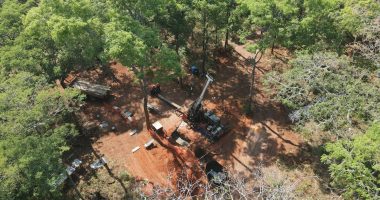
Evolution Energy Minerals (ASX: EV1) has identified an approximately 1.3km copper corridor in its now completed maiden reverse circulation (RC) drilling program at the Chikundo copper project in southern Tanzania.

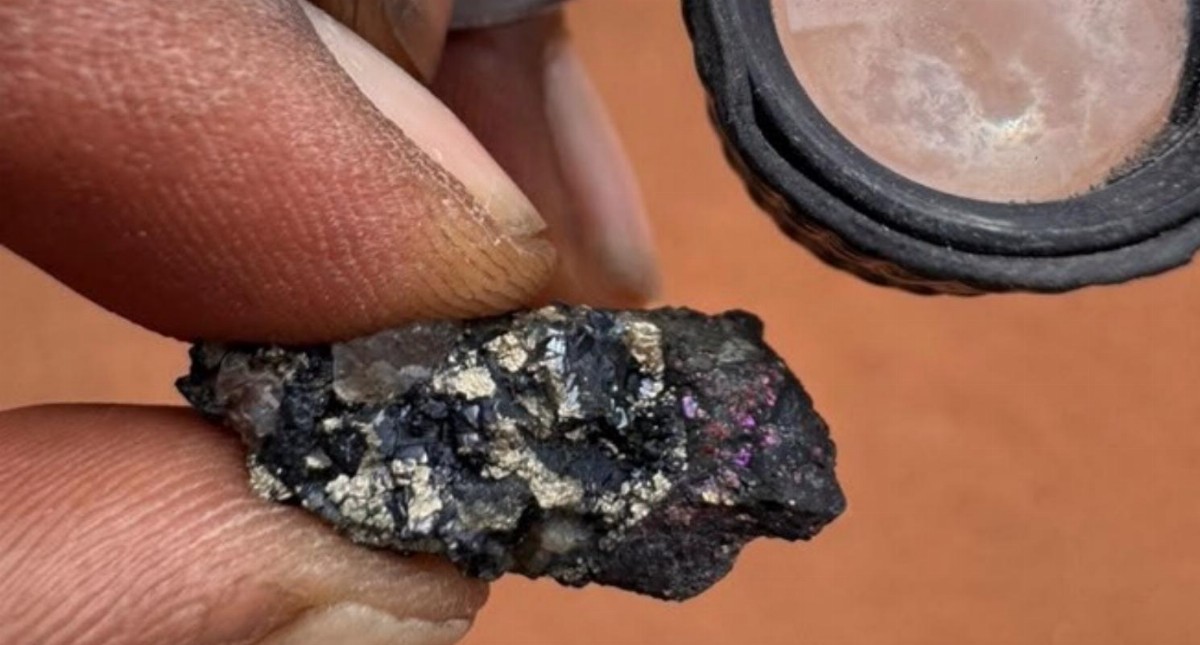
Copper sulphide mineral chalcopyrite has been logged in 10 of the 11 holes drilled, tracing a copper sulphide corridor south-west from the historical Malachite Pit copper workings.
The results have confirmed the chalcopyrite-bearing intervals become markedly thicker towards the south-west – the same direction in which a 2026 soil program identified the strongest tellurium and bismuth pathfinder anomalies.
MD, Craig Moulton, said the drilling now links the copper at surface at Malachite Pit to a sulphide system that is thicker, broader and still open to the south-west and at depth.
“Eleven holes, 1.3 kilometres of strike, and chalcopyrite in ten of them. Just as importantly, the sulphide zones get thicker as we move south-west – from a few metres near Malachite Pit to more than 30 metres of chalcopyrite-bearing rock in every one of the western holes,” he said.
“That is exactly where the soil geochemistry told us to look. The tellurium and bismuth anomalies were strongest in the south-west, and the drilling has now matched them. The system remains open in that direction and at depth.
“These are visual observations and assays are the critical next step. Given the quartz veining with the sulphides and the artisanal gold mining in the area, we have added gold, platinum and palladium to the assay suite. The Board and I look forward to reporting results as they are received.”
Chalcopyrite has been logged in every hole with each interval sitting within broader zones of sulphide veining and disseminated sulphides.
The company interprets the chalcopyrite-bearing intervals as part of a laterally extensive copper sulphide system that thickens to the south-west,
Near Malachite Pit, chalcopyrite occurs in one or two intervals of 2.0m to 7.0m per hole. The intervals become thicker and more numerous, forming an upper zone from approximately 25m to 90m downhole and in a deeper zone below approximately 90m.
This trend matches the soil geochemistry. A 2026 soil program identified the strongest tellurium (Te) and bismuth (Bi) anomalies in the south-western part of the Chikundo copper anomaly. Te and Bi are relatively immobile during weathering and commonly accompany hydrothermal copper sulphides, making them reliable pathfinders where copper may have been leached from surface. The thickest drill intervals lie beneath a south-western pathfinder anomaly.
The company is now evaluating diamond-drill extensions of selected holes to 200m or beyond, to test the depth extent of the thicker south-western zones.
Once assays are received, the company will review them with the logging and pathfinder geochemistry before deciding on follow-up drilling.
Options include diamond-drill extensions of selected RC holes, further step-outs to the south-west, holes on section to define the orientation of the mineralisation, and regional targets at Chikundo West and Chikundo North.
EV1 was steady at 0.8¢ with a Mkt cap of $6.533M.
Join the discussion: See what HotCopper users are saying about Evolution Energy Minerals and be part of the conversations that move the markets.
The material provided in this article is for information only and should not be treated as investment advice. Viewers are encouraged to conduct their own research and consult with a certified financial advisor before making any investment decisions. For full disclaimer information, please click here.