
Join our daily newsletter At The Bell to receive exclusive market insights
- Prime Minister Scott Morrison promotes the coal industry’s future, just days after Australia committed to a worldwide accord to “phase down” the sector
- UK Prime Minister, Boris Johnson, said the COP26 climate conference in Glasgow “sounded the death knell for coal power,” a statement Mr Morrison rejects
- “I don’t believe it did, and for all of those who are working in that industry in Australia, they’ll continue to be working in that industry for decades to come,” Mr Morrison says
- Deputy Prime Minister Barnaby Joyce stated that international demand for coal is high and that Australia should capitalise on it
Prime Minister Scott Morrison and his deputy, Barnaby Joyce, have signalled confidence in the coal industry’s future, just days after Australia committed to a worldwide accord to “phase down” the sector in order to combat climate change.
The UK Prime Minister, Boris Johnson, said the COP26 climate conference in Glasgow “sounded the death knell for coal power,” but Mr Morrison rejected that assessment of the global negotiations’ conclusion.
“I don’t believe it did, and for all of those who are working in that industry in Australia, they’ll continue to be working in that industry for decades to come,” he said.
“There will be a transition that occurs over a long period of time and I make no apologies for Australia standing up for our national interests.”
Almost 200 nations have signed the Glasgow Climate Pact, signalling a major shift in the world’s strategy to combating carbon emissions, establishing a roadmap to limiting global temperature increase to 1.5 degrees Celsius, and signalling the ‘beginning of the end for coal power’.
“For the first time ever a UN climate change conference has delivered a mandate to cut the use of coal for power generation,” Mr Johnson said.
“And it’s backed up by real action from individual countries – for example we’ve arranged a multi-billion pound partnership to help South Africa ditch coal and create new green jobs instead.
“On top of that we’ve brokered a deal with the G20 to end international finance for coal by the end of next month.”
Deputy Prime Minister Barnaby Joyce stated that international demand for coal is high and that Australia should capitalise on it.
“You’ve got record prices and record volumes, so if the world’s buying it, there’s a market for it,” he said.
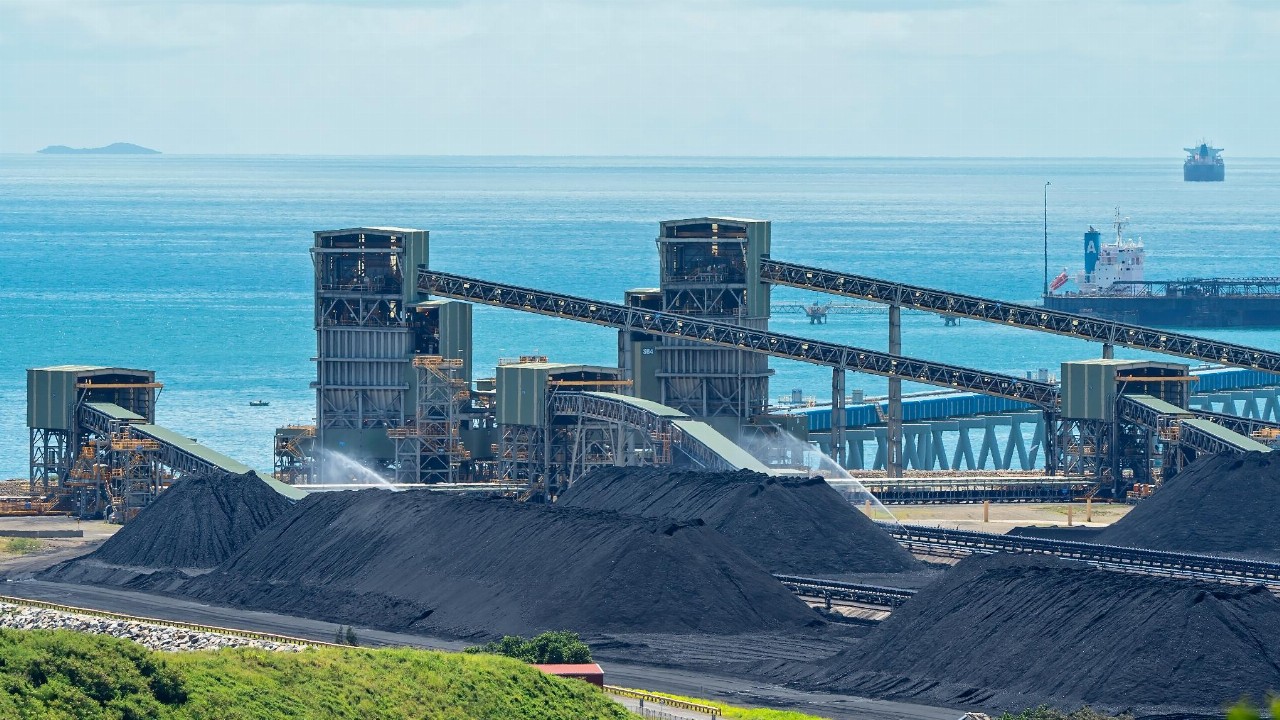
“If they say the world is transitioning away from [coal], well, you’ll see that at the Port of Newcastle and you’ll see that at the Port of Gladstone — but it’s not happening.”
Australia’s exports of metallurgical coal are forecast to rise from 171 million tonnes in 2020–21 to 186 million tonnes by 2022–23.
Australia’s metallurgical coal export values are expected to recover from $23 billion in 2020–21 to $30 billion in 2022–23, reversing the majority of their previous fall.
Australian thermal coal exports fell from an all-time high of 213 million tonnes in 2019-20 to 192 million tonnes in 2020–21. As Asian economies return to normalcy, exports are estimated to rebound to 212 million tonnes by 2022–23.
The value of exports is expected to climb from $16 billion in 2020–21 to $24 billion in 2021–22, before falling back to $19 billion in 2022–23.