

Join our daily newsletter At The Bell to receive exclusive market insights
Well, I might often write the 1970’s oil crisis doesn’t matter anymore when it comes to Iran’s ability to squeeze the USA’s oil, and in that way, a war in Iran wouldn’t be a rational reason for oil traders to turn bullish. But that position of mine doesn’t account for everything.
Listen to the HotCopper podcast for in-depth discussions and insights on all the biggest headlines from throughout the week. On Spotify, Apple, and more.
There is one eventuality, a worst-case scenario, that has come to the fore: Iran has threatened to attack oil tankers travelling through the Strait of Hormuz, a crucial bottleneck through which vast amounts of Saudi Arabian oil travel and through which other Middle Eastern nations’ output does the same.
In fact, on Monday, both oil trading firms and, perhaps more importantly, the mammoth insurance industry that underpins global freight traffic already decided to stop using the Strait of Hormuz until this U.S.-Israeli attack, or the war on Iran, subsides.
Well, Trump has since said the operation could be four weeks long, and since then, Iran has declared it will indeed start attacking ships that use the Strait of Hormuz (presumably those of Middle Eastern nations hosting U.S. bases, which Iran has been attacking). Cue a Brent Crude price chart that looks like this.

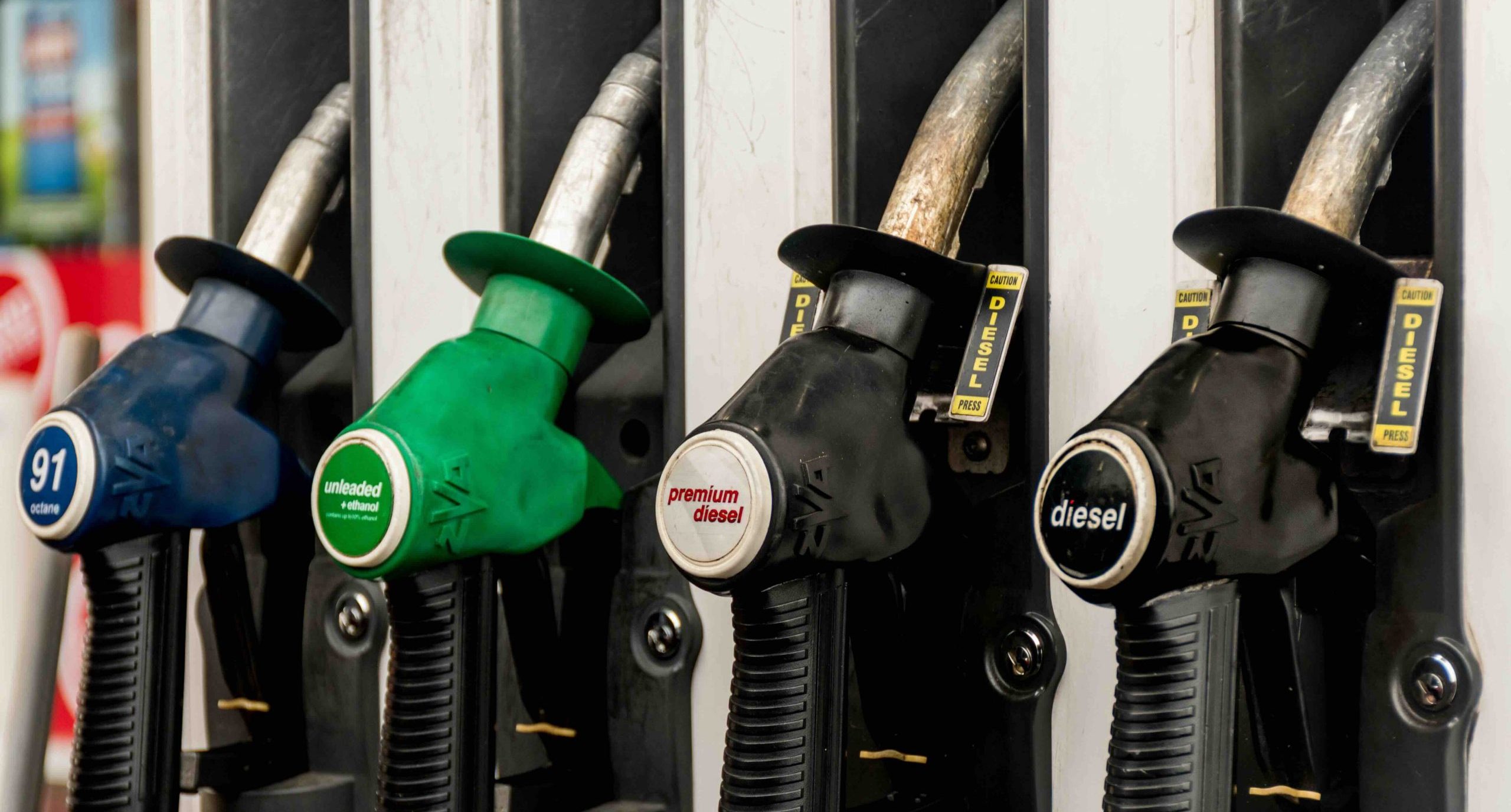
This impacts fuel, right?
Indeed, it does. To such an extent that things down under, in terms of upward inflationary pressure, could get pretty ugly. In fact, analysts from Westpac IQ – the bank’s market intelligence branch – have been so kind as to publicly release a note outlining their various scenarios for how high the fuel price might go.
Fuel prices form part of ‘Headline CPI’, and they’re a major volatile item that gets stripped out when calculating core inflation (which in Australia is called ‘Trimmed Mean Inflation’).
Headline inflation is already up on the back of electricity prices, having climbed over +30% in the last year; the RBA has already hiked once this year, and headline CPI already sits at 3.8%. A sharp boost to regular fuel prices at the pump would make things worse – think people driving to work, and just as importantly, parents doing daily school runs. (And that’s to say nothing of Sunday drives.)
How bad could it get?
Well, pretty bad news there. Trump sees this conflict going on for a month, he said that earlier this week. And Westpac IQ’s analysts say that if the Strait of Hormuz remains unusable for a month, then the price of Brent could hit as much as US$113/bbl.
“A disruption to Iranian production only could see the price of oil rise another US$25 per barrel to around US$100,” the analysts wrote (which surprises this finance journalist at least because Chinese refiners yearly throughput in aggregate is only comprised of around 10% Iranian crude.)
But it gets worse still. “If shipping through the Strait of Hormuz is affected for up to a month, Brent could instead spike to US$113 per barrel,” Westpac analysts also wrote, positing that if this extends for three months – a financial quarter – the price could get closer to US$200/bbl.
That latter instance feels fairly extreme, but it’s a possibility with a chance more than zero.
How long will this last?
At any rate, seeing as a price above US$80/bbl generally leads to Aussie servo prices above A$2/L, further pain comes when the price hits US$100/bbl, and anything higher than that, we’re looking at prices of up to A$3/L.
RBA Governor Bullock prepped the Australian economy on Tuesday for such pain ahead in a press conference. A $3/L price would be a nightmare for the Australian consumer, it would be a nightmare for service station operators, it would be a nightmare for the Reserve Bank because of the impact it would have on inflation, and it could just be the ticket a struggling LNP needs to find support.
That political consideration is neither here nor there, but it’s one of the most obvious macro consequences I can see occurring down under if that were the case.
So the question becomes: How long will this conflict last? If you look at oil as a kind of barometer measuring how long the market expects this conflict to continue, right now, things aren’t as bad as they could be. Trump has declared the military may escort ships through Hormuz and that Washington will offer insurance cover.
When it comes to stock markets, Goldman Sachs sees stock markets around the world taking a ‘couple of weeks’ to digest what’s going on with Iran – so in two weeks, if equity markets shake all of this off, we’ll probably see some contrarian contagion calm spread into other markets, like, perhaps, that for oil.
But right now, it’s all about unknowables. And traders moving into risk-off investments across the board suggest that’s the case – right now, there’s so much uncertainty that even gold’s being sold off. Ruminate on that one.
Join the discussion: See what’s trending right now on HotCopper, Australia’s largest stock forum, and be part of the conversations that move the markets.
The material provided in this article is for information only and should not be treated as investment advice. Viewers are encouraged to conduct their own research and consult with a certified financial advisor before making any investment decisions. For full disclaimer information, please click here.

-1200x645-380x200.jpg)