
Join our daily newsletter At The Bell to receive exclusive market insights
- Spending across CBDs in capital cities increased by an average of 22.4 per cent nationwide over the last six months as workers gradually returned to the workplace
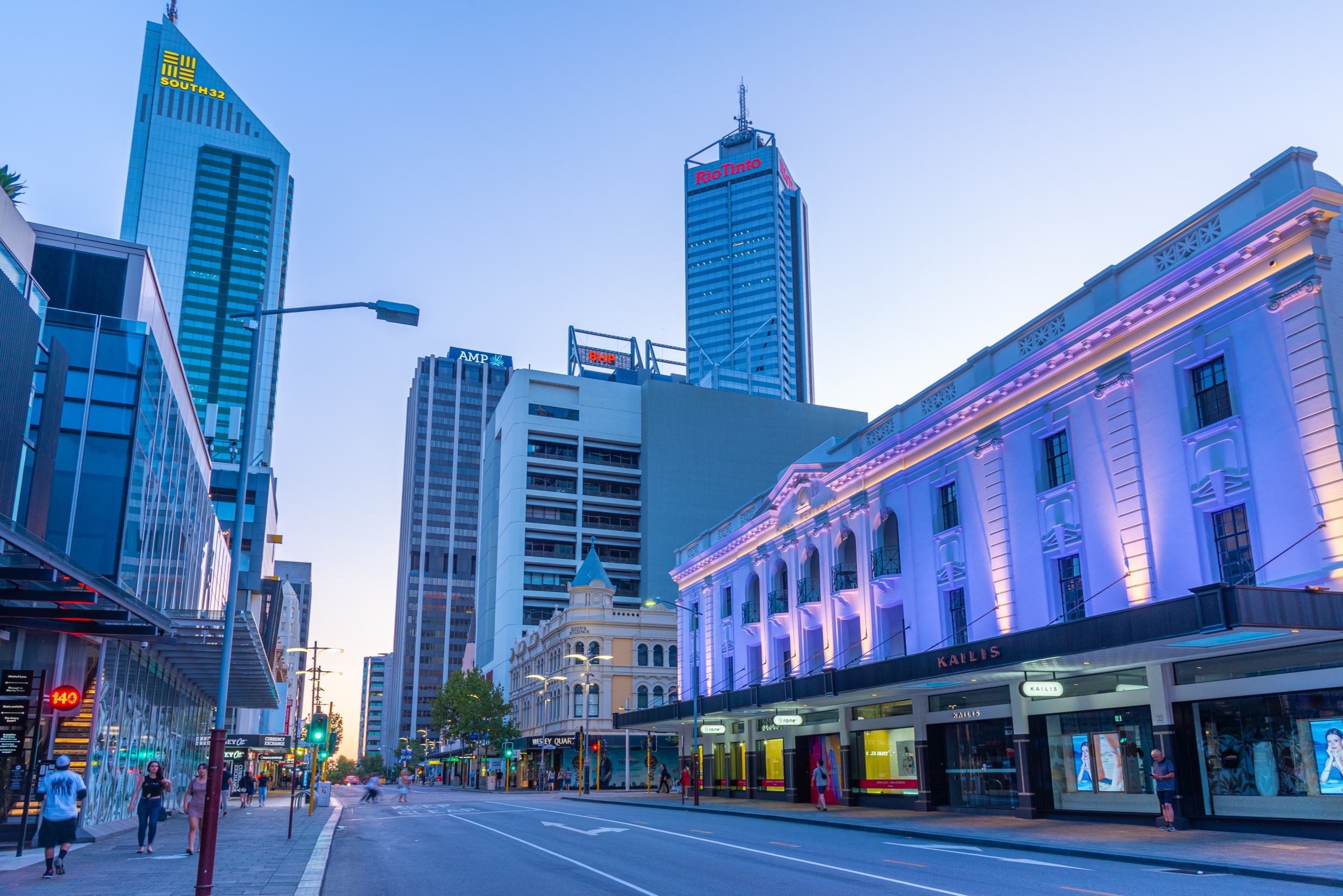
- Perth was leading the pack with spending up 33.7 per cent, closely followed by Canberra up 33.3 per cent and Adelaide up 30.1 per cent
- While also showing positive movement, the picture isn’t so rosy in Darwin and Melbourne, which only saw spending increase 5.25 and 2.36 per cent respectively
- Movement in the Melbourne CBD during mid-March 2021 was at an average of only 39 per cent of the pre-COVID-19 levels of movement during January and February 2020
- Adelaide, Perth and Brisbane over the last few months are the cities closest to pre-pandemic levels of movement
Spending across CBDs in capital cities increased by an average of 22.4 per cent nationwide over the last six months as workers gradually returned to the workplace.
According to data released by the Commonwealth Bank (CBA) today, Gen X and older millennials (35 to 49-year-olds) led the spending recovery across most of the country’s CBDs, with the exception of Sydney and Canberra where spending growth was driven mostly by younger millennials (25 to 34-year-olds).
Perth was leading the pack with spending up 33.7 per cent, closely followed by Canberra up 33.3 per cent and Adelaide up 30.1 per cent.
Not far behind was the Gold Coast (27.4 per cent), Hobart (22.8 per cent), Sydney (21.5 per cent) and Brisbane (20.5 per cent).
While also showing positive movement, the picture isn’t so rosy in Darwin and Melbourne, which only saw spending increase 5.25 and 2.36 per cent respectively.
“We’re encouraged to see spending in our CBDs on the up and we hope to see this trend continue as more people start coming back into city centres more regularly,” Commonwealth Bank Executive General Manager of Small Business Claire Roberts said.
“Small businesses in CBD areas have had it really tough over the past year but we’re seeing encouraging signs of recovery,” she said.
According to Roy Morgan, movement data in the Melbourne CBD during mid-March 2021 was lagging behind the other capital cities.
Movement in the Melbourne CBD during mid-March 2021 was at an average of only 39 per cent of the pre-COVID-19 levels of movement during January and February 2020.
“Also struggling to regain the its pre-pandemic levels of movement is the Sydney CBD which sits at 47 per cent in mid-March, and still below the levels of mid-December prior to the Avalon outbreak on Sydney’s Northern Beaches which sent movement plunging over the Christmas/New Year period,” Ray Morgan CEO Michele Levine said.
“Other cities have fared better despite short and sharp lockdowns in Adelaide, Perth and Brisbane over the last few months these cities are closest to pre-pandemic levels of movement with the Adelaide CBD on 83 per cent leading the Perth CBD (72 per cent) and Brisbane CBD (68 per cent),” she concluded.