

Join our daily newsletter At The Bell to receive exclusive market insights
Greenland Mines Ltd (NASDAQ: GRML, FSE: HK6) is bringing together two significant critical minerals opportunities in Greenland, combining its established Skaergaard palladium-gold-platinum project with the newly acquired Sarfartoq neodymium-praseodymium rare earths project.
.png)
The combination gives the company exposure to two strategically important areas of the critical minerals market while establishing the foundations of a broader North Atlantic minerals platform.
The strategy has moved forward significantly during 2026. Greenland Mines has advanced technical work at Skaergaard, completed the acquisition of Sarfartoq and continued to develop plans connecting Greenland’s mineral resources with potential downstream processing and industrial markets in Europe and North America.
A Major Palladium, Gold and Platinum Opportunity
At the heart of Greenland Mines’ portfolio is the Skaergaard Project in southeast Greenland, a large-scale mineral system containing palladium, gold and platinum, alongside potential critical-metal by-products.
The company’s 2026 S-K 1300 Mineral Resource Estimate reported 15.0 million ounces of palladium equivalent in the Indicated category and a further 17.49 million ounces in the Inferred category. The Indicated resource includes approximately 7.57 million ounces of palladium, 3.19 million ounces of gold and 0.60 million ounces of platinum.
These figures are from the Skaergaard Technical Report Summary prepared by SLR Consulting (Canada) Ltd., with a Mineral Resource Estimate effective July 3, 2026. Palladium-equivalent (PdEq) is a calculated measure based on the report’s metal-price and recovery assumptions; it is not a quantity of contained palladium.
Importantly, Greenland Mines is continuing to add technical understanding to the resource rather than simply relying on its existing scale.
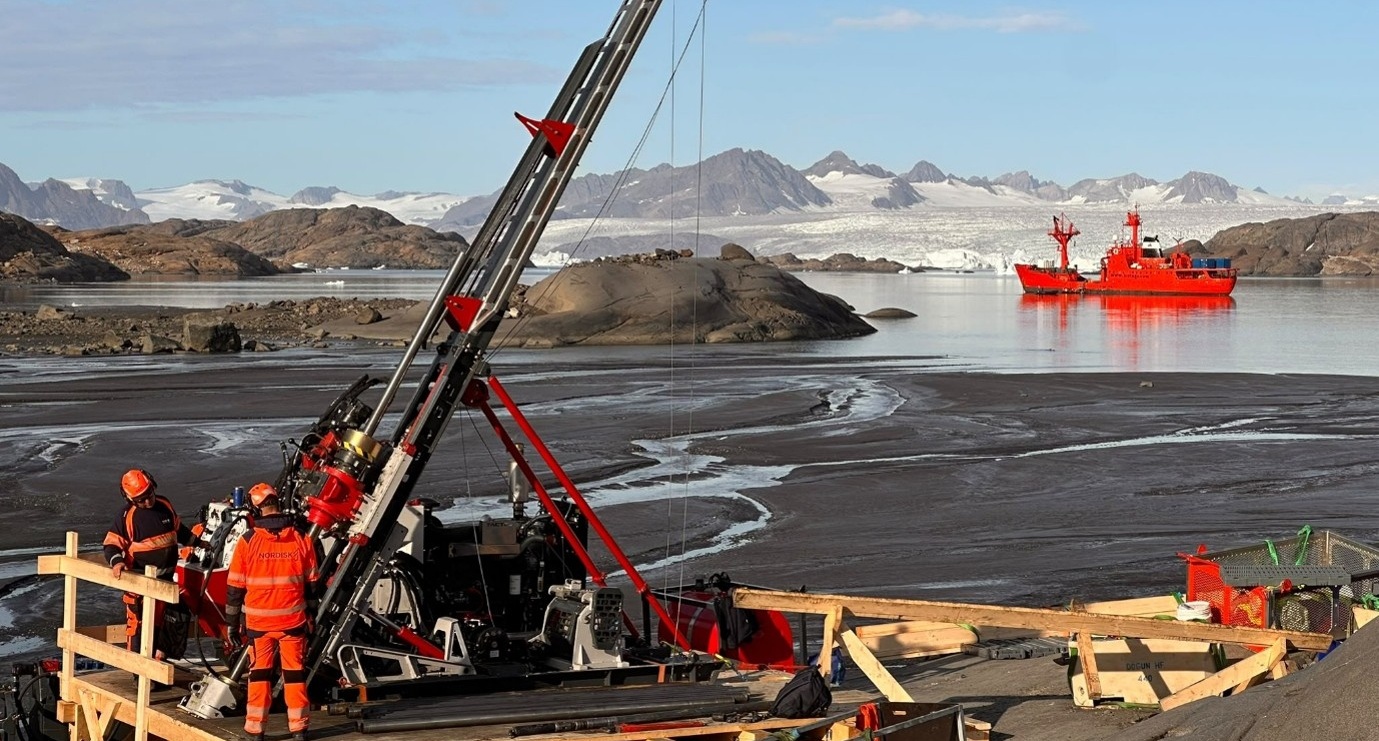
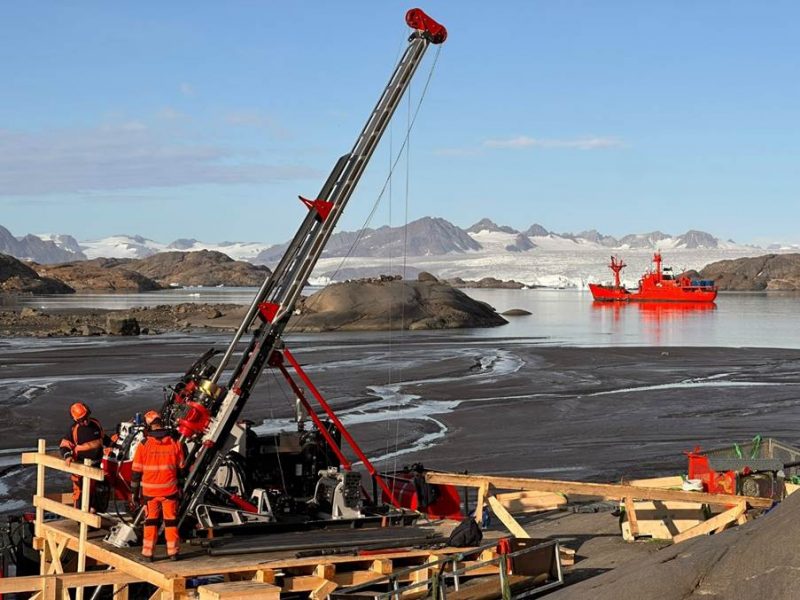
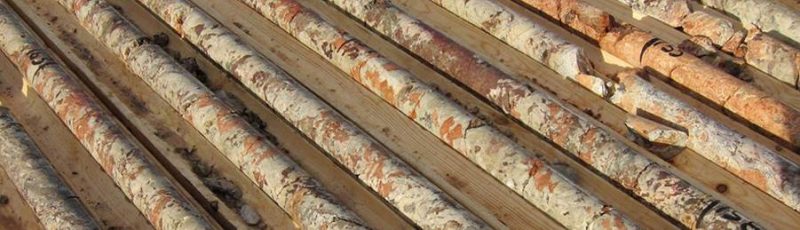
Its 2026 field programme included drilling, geotechnical work, geophysical surveys, environmental studies and bulk sampling. The company completed 4,480 metres of diamond drilling across 17 holes, together with more than nearly 105 tonnes of bulk material, providing materials for advanced metallurgical and process flow-sheet bench and pilot plant test-work.
The bulk-sampling programme itself exceeded the original plan, with 104.8 tonnes of material collected from seven sites. The samples cover different mineralised horizons.
This work represents an important step as Greenland Mines continues to evaluate and advance the Skaergaard Project towards production.

Sarfartoq Adds a Second Critical Minerals Opportunity
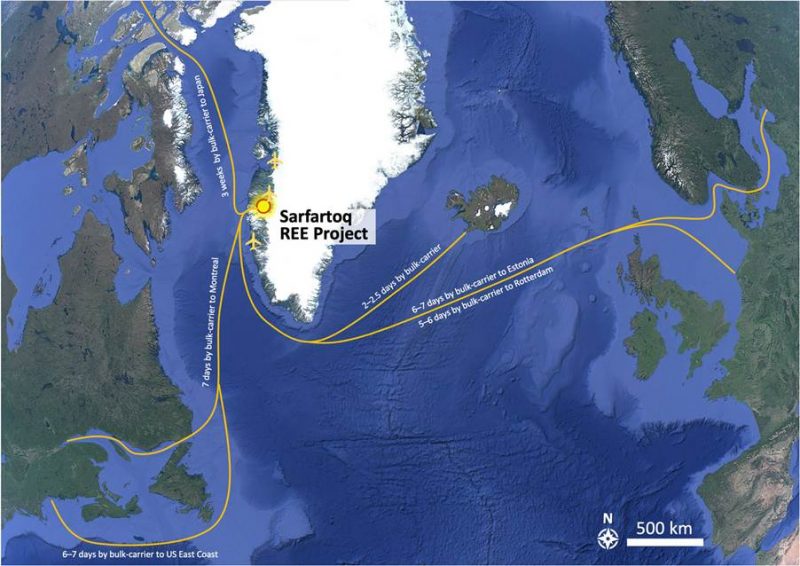
The company’s strategy became considerably broader with its acquisition of the Sarfartoq rare earth project in southwest Greenland, which closed in September 2026.
Sarfartoq is focused particularly on neodymium and praseodymium, two magnet rare earth elements that are important components in permanent magnets used in electric vehicles, wind turbines, robotics, defence systems and other advanced technologies.
The project has an extensive exploration history, with more than 15 years of drilling, metallurgical testing, engineering studies and environmental work.
In August, Greenland Mines announced an independently prepared S‑K 1300 Technical Report Summary for Sarfartoq, effective July 31, 2026, reporting an Indicated Mineral Resource under S‑K 1300 for the first time.
The resource is particularly notable for its concentration of the magnet rare earth elements that are most important to today’s supply chains.
Greenland Mines also has an important strategic relationship with Neo Performance Materials, which retains offtake rights covering up to 60% of future Sarfartoq ore or mineral concentrate production, subject to the relevant project development conditions.
That relationship provides the project with a potential connection into Western rare earth processing and magnet supply chains.
Two Projects, One Broader Strategy
The combination of Skaergaard and Sarfartoq gives Greenland Mines a differentiated portfolio.
Skaergaard provides exposure to palladium, gold and platinum, while Sarfartoq adds exposure to neodymium, praseodymium and other rare earth elements.
This diversification is important because the company is not dependent on a single commodity or project.
Instead, Greenland Mines is building a portfolio around minerals that are increasingly important to energy, technology, defence and advanced manufacturing.
The company is also pursuing a broader North Atlantic critical minerals strategy, seeking to connect Greenland’s resource base with potential processing, logistics and industrial infrastructure in the wider region. Its strategy includes potential downstream opportunities in Iceland, where it has been developing relationships around industrial infrastructure.
Moving Towards the Next Stage
The focus now turns to advancing both projects through their next technical milestones.
At Skaergaard, the completed 2026 field programme provides additional drilling, sampling, geological, metallurgical and engineering information that can feed into the next phase of development work.
At Sarfartoq, Greenland Mines is progressing work around resource upgrading, engineering, infrastructure assessment and metallurgical testing, with the company targeting further advancement towards a Pre-Feasibility Study.
The company is therefore entering the next stage with a substantially broader portfolio than it had at the beginning of 2026.
For investors looking at the critical minerals sector, Greenland Mines offers an interesting combination: a large-scale palladium-gold-platinum resource at Skaergaard and an advanced rare earth opportunity at Sarfartoq, both located in Greenland and supported by a strategy designed to connect resources with Western supply chains.
With the two projects now sitting within a single platform, Greenland Mines is positioning itself around some of the mineral resources that could play an increasingly important role in the future of energy, technology, defence and industrial manufacturing.
Cautionary Note on Project Development
Greenland Mines’ projects remain at the exploration and development stage. Neither project is in production, and their advancement depends on further technical studies, metallurgical evaluation, permitting, financing and execution. No Initial Assessment or Pre-Feasibility Study has been completed for Skaergaard. Sarfartoq has an Initial Assessment, but further studies and development work remain necessary, and there is no assurance that either project will reach production.
The material provided in this article is for information only and should not be treated as investment advice. Viewers are encouraged to conduct their own research and consult with a certified financial advisor before making any investment decisions. For full disclaimer information, please click here.